

Sports Injury Rehabilitation in NYC
Manhattan Physical Therapy
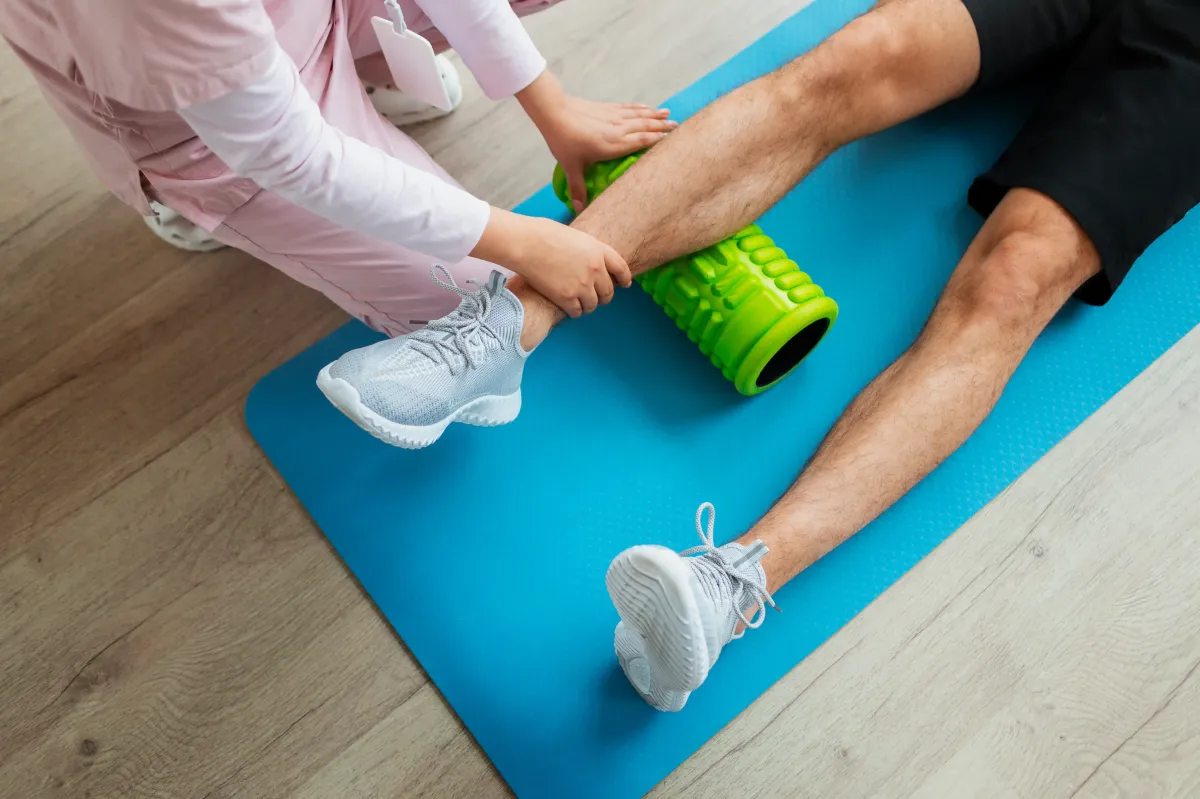
A sports injury can change your routine in a matter of seconds. One awkward landing, sudden twist, collision, or increase in training can turn an ordinary workout or game into weeks of pain and uncertainty. And even injuries that start gradually, such as runner’s knee or Achilles tendinopathy, can eventually make the activities you enjoy difficult.
What Is Sports Injury Rehabilitation?
Sports injury rehabilitation is a structured process of recovering from an injury while preparing your body to handle the demands that caused it in the first place. Physical therapy and therapeutic exercise are central to this process, but a good rehabilitation program does not end simply because your pain has improved.
Your program may include mobility work, progressive strengthening, balance and coordination exercises, manual therapy, conditioning, and sport-specific movements. As your recovery progresses, exercises can become more demanding, moving from basic strength and control to running, jumping, changing direction, or other movements relevant to your sport.
That progression matters because feeling better is not necessarily the same as being ready to compete.
A 2016 international consensus statement on return to sport described return as a continuum rather than a single decision made at the end of rehabilitation. It also emphasized that the decision should consider factors such as recovery, physical demands, and the athlete's individual circumstances.
In practical terms, this might mean that a basketball player who can walk without pain still needs to work on landing mechanics, single-leg strength, jumping, and cutting before returning to a full game. A runner may need to rebuild tolerance to running gradually rather than simply waiting until the knee stops hurting.
Acute vs. Chronic Sports Injuries
Sports injuries generally fall into two broad categories: acute injuries and chronic or overuse injuries.
Acute sports injuries happen suddenly. A fall, collision, awkward landing, or forceful movement can damage tissue in an instant. An ankle sprain, muscle tear, ligament injury, fracture, or shoulder dislocation are common examples. Pain and swelling may appear immediately, although the severity of an injury is not always obvious from symptoms alone.
Chronic sports injuries develop more gradually. Repeated stress can eventually exceed the body's ability to recover, particularly when training volume increases faster than the tissues can adapt. Runner's knee, Achilles tendinopathy, rotator cuff problems, and some stress injuries can develop this way.
The distinction is important because rehabilitation may need to address different factors. After an acute injury, early priorities may include protecting the injured area, controlling symptoms, restoring safe movement, and gradually rebuilding strength. With an overuse injury, rehabilitation may also involve looking closely at training load, movement patterns, muscle capacity, recovery, and technique.
Common Symptoms of Sports Injuries
Sports injuries can look very different depending on the tissue involved and how severe the injury is. Some are obvious, while others begin as a small annoyance that becomes harder to ignore. Common symptoms include:
Sudden or sharp pain during activity
Pain that develops gradually with repetitive movement
Swelling or bruising
Reduced range of motion or stiffness
Muscle weakness
Difficulty bearing weight
Joint instability or a feeling that the joint may "give way"
Clicking, popping, or grinding
Tenderness around a muscle, tendon, ligament, or bone
Limping or other changes in the way you move
Numbness or tingling
Common Sports Injuries We Treat
Sports rehabilitation can be appropriate for a wide range of musculoskeletal injuries, from relatively simple sprains and strains to injuries requiring surgery and postoperative rehabilitation. Common examples include:
Ankle sprains and instability
ACL, MCL, and other ligament injuries
Meniscus injuries
Hamstring and other muscle strains
Achilles tendinopathy
Rotator cuff injuries
Shoulder instability and labral injuries
Tennis and golfer's elbow
Runner's knee and patellar tendinopathy
IT band-related pain
Stress injuries and stress fractures
Hip injuries
Wrist and hand injuries
Neck and back injuries related to sports
Postoperative sports injuries
Some injuries need medical or orthopedic evaluation before or alongside physical therapy. When imaging or additional medical assessment is appropriate, the rehabilitation plan should take those findings into account rather than treating every sports injury the same way.
How Are Sports Injuries Diagnosed?
A good rehabilitation plan starts with understanding what actually happened, not simply where it hurts.
At Manhattan Physical Therapy, an evaluation begins with your injury history, symptoms, previous injuries, training routine, and the movements that make your symptoms better or worse. Your physical therapist may assess joint mobility, muscle strength, flexibility, balance, coordination, and movement quality.
For athletes, the evaluation also needs to consider the demands of the sport. A knee that feels fine during a basic squat may respond differently to a single-leg landing, sprint, or sudden change of direction.
Depending on the injury, your therapist may also recommend that you see a physician or obtain imaging such as an X-ray, MRI, or ultrasound. Physical therapy does not replace medical diagnosis when an injury requires further medical evaluation.
What Does Sports Injury Rehabilitation Involve?
There is no single exercise program that works for every athlete. Rehabilitation usually progresses as your symptoms, strength, movement, and tolerance improve.
Phase 1: Protect the Injury and Restore Basic Movement
Early rehabilitation may focus on reducing pain and swelling, protecting healing tissue, and restoring comfortable movement. Depending on the injury, this could include gentle mobility exercises, controlled strengthening, balance work, or modifications to your normal activities.
Phase 2: Rebuild Strength and Control
Once basic movement is improving, rehabilitation becomes more active.
Exercises may target the muscles that support the injured area, including the quadriceps, hamstrings, glutes, calves, core, or shoulder stabilizers. Balance and coordination are also important, particularly after injuries involving the knee or ankle. This is often the stage when patients notice an important difference
Phase 3: Strength, Conditioning, and Sport-Specific Training
As strength and movement control improve, exercises can become more demanding. Depending on your sport, this may involve:
Running and acceleration drills
Jumping and landing
Agility and change-of-direction exercises
Plyometric training
Throwing or overhead movements
Single-leg strength and stability
Sport-specific conditioning
Phase 4: Return to Sport
The final stage is not simply a decision that you are "pain-free." It is about determining whether you can tolerate the demands of your activity.
Research and international consensus statements describe return to sport as a progression rather than a single moment. Factors can include strength, range of motion, balance, functional performance, symptoms, confidence, and sport-specific movement.
For an athlete recovering from an ACL injury, for example, rehabilitation guidelines recommend combining strength and hop testing with movement quality and other measures rather than relying on time alone.
ACL, Meniscus, Ankle, and Shoulder Rehabilitation
Some sports injuries require particularly structured rehabilitation.
ACL rehabilitation often involves months of progressive work rather than a simple "heal and return" approach. Early goals can include controlling swelling, restoring full knee extension, and rebuilding quadriceps strength. Later stages may involve running, jumping, landing, cutting, agility, and sport-specific drills.
Research-based consensus recommendations describe ACL return to sport as a criteria-based progression from returning to participation, to returning to sport, and eventually returning to performance.
Meniscus Rehabilitation
Rehabilitation after a meniscus injury depends heavily on the injury itself and whether surgery was performed.
A meniscus repair may require more protection during the early stages to allow the tissue to heal. Rehabilitation after a partial meniscectomy may progress differently. In either case, restoring knee motion, strength, control, and tolerance to loading is important before returning to running or cutting sports.
Ankle Sprain Rehabilitation
An ankle sprain can seem minor, especially when you can walk again within a few days. But returning to sport too quickly can leave unresolved deficits in strength, balance, or confidence.
A systematic review of expert opinions found that return-to-sport decisions after lateral ankle sprain should consider sport-specific movement, balance, pain and swelling, range of motion, strength, and patient-reported outcomes.
Rehabilitation may therefore progress from basic ankle mobility and strengthening to balance exercises, running, jumping, changes of direction, and eventually sport-specific drills.
Shoulder Rehabilitation
Shoulder rehabilitation is particularly important for athletes who repeatedly use their arms overhead, including baseball and softball players, swimmers, tennis players, and recreational gym-goers.
A program may include rotator cuff strengthening, scapular control, thoracic mobility, progressive resistance, and gradual exposure to overhead or throwing movements. The objective is to rebuild the capacity needed for your activity rather than simply stopping shoulder pain temporarily.
How Long Does Sports Injury Rehabilitation Take?
There is no universal recovery timeline.
A mild muscle strain may improve considerably within weeks, while an ACL reconstruction or significant tendon injury can require many months of rehabilitation. Your age, injury severity, treatment, previous injuries, training demands, and response to rehabilitation all affect the timeline.
That is why returning on a predetermined date can sometimes be misleading. For ACL injuries in particular, expert consensus recommends a criteria-based progression rather than relying only on elapsed time.
How Can Sports Rehabilitation Help Prevent Another Injury?
Rehabilitation should not stop the moment you can perform your normal activities without pain.
Before returning to demanding sports, it is useful to identify remaining weaknesses or movement problems. Depending on your injury, this may include testing strength, balance, jumping and landing, agility, or sport-specific movements.
This is especially relevant after an ankle or ACL injury. A 2021 international consensus for acute ankle sprains identified five broad areas for return-to-sport decisions: pain, ankle impairments, athlete perception, sensorimotor control, and sport/functional performance.
In practical terms, prevention may involve continuing strength training, improving landing mechanics, managing training volume, maintaining mobility, and giving the body enough time to recover between demanding sessions.
When Should You See a Physical Therapist for a Sports Injury?
You do not necessarily need to wait until an injury becomes severe. Consider an evaluation if:
Pain keeps returning when you resume training
You repeatedly sprain the same joint
Your knee or ankle feels unstable
You have persistent swelling
You have lost strength or range of motion
You are changing how you run, walk, lift, or play because of pain
You are struggling to return to your previous level after surgery
You are unsure whether you are ready to resume your sport
You should seek prompt medical evaluation for significant trauma, suspected fracture or dislocation, severe swelling or deformity, inability to bear weight, or concerning neurological symptoms.
Manhattan Physical Therapy can help you recover from your sports injury and work toward a safe return to activity. Call (212) 213-3480 to schedule your evaluation in NYC.
Frequently Asked Questions
Can I exercise with a sports injury?
It depends on the injury and the type of exercise. Continuing to train through worsening pain is not the same as following a controlled rehabilitation program. A physical therapist can help identify activities that are appropriate while the injured tissue recovers.
Is physical therapy necessary after a sports injury?
Not every minor injury requires formal rehabilitation. However, physical therapy can be useful when an injury causes persistent pain, weakness, restricted movement, instability, or difficulty returning to normal activity or sport.
Can sports rehabilitation help after surgery?
Yes. Postoperative rehabilitation is commonly used after procedures such as ACL reconstruction, meniscus surgery, tendon repair, and other sports-related operations. The progression should follow the surgical procedure, healing requirements, and guidance from your medical team.
Manhattan Physical Therapy
✆ Phone (appointments):
(212) 213-3480
Address: 385 5th Ave, Suite 503, New York, NY 10016


