

Acupuncture for Sciatica Pain in NYC
Manhattan Physical Therapy
Sciatica can turn ordinary movements into something you think about all day. Sitting at your desk, walking across Midtown, getting into a cab, or standing up after a long meeting can trigger a sharp, burning, or electric sensation that travels from the lower back or buttock into the leg
.
When medication, rest, or stretching has not provided enough relief, acupuncture may be worth discussing as part of a broader treatment plan. At Manhattan Physical Therapy, acupuncture can be considered alongside physical therapy and movement-based care rather than as a stand-alone solution.
Recent research gives patients a reason to take acupuncture seriously, but it does not support promising a cure. A 2024 randomized clinical trial found that acupuncture reduced leg pain and improved physical function in people with chronic sciatica caused by a herniated disc. The benefits compared with sham acupuncture remained statistically significant through 52 weeks.
What Is Sciatica?
Sciatica is not a diagnosis by itself. It describes a group of symptoms caused by irritation or compression involving the sciatic nerve or its nerve roots.
The sciatic nerve begins in the lower spine, passes through the buttock, and travels down the leg. When one of the nerve roots becomes irritated, symptoms may include sharp or burning pain, tingling, numbness, or weakness. The symptoms commonly affect one side and may extend from the lower back or buttock into the thigh, calf, or foot.
A herniated lumbar disc is one common cause, but it is not the only one. Other possible causes include spinal stenosis, degenerative changes in the spine, spondylolisthesis, and irritation around the deep muscles of the hip and buttock.
That distinction matters when considering acupuncture for sciatica in NYC. A person whose symptoms come from a lumbar disc problem may need a different approach from someone whose pain is strongly influenced by muscle tension around the hip.
Sciatica can also feel very different from person to person. One patient may describe a deep ache in the buttock that becomes worse after sitting. Another may feel a sudden electrical sensation down the back of the leg. Numbness or weakness in the foot can occur in more significant cases.
How Can Acupuncture Help Sciatica Pain?
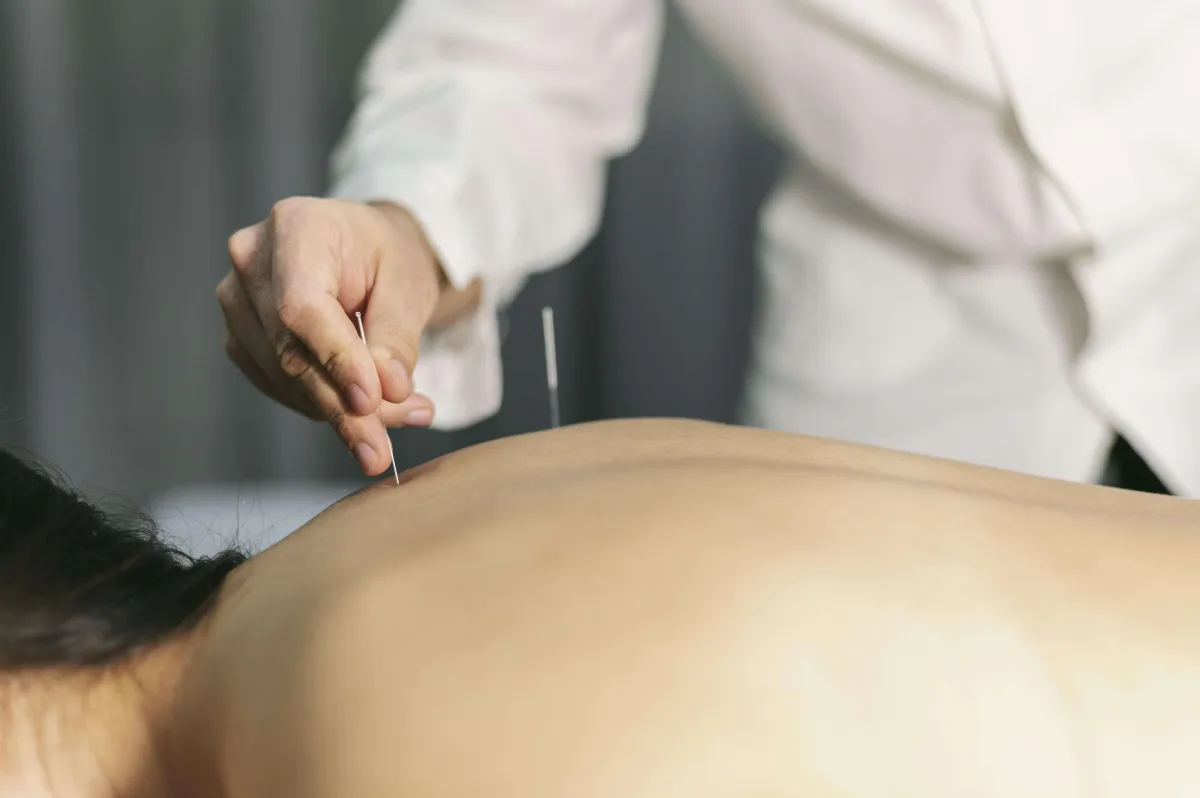
Acupuncture uses very thin, sterile needles inserted into selected points on the body. For people with sciatica, treatment may involve areas around the lower back, buttock, hip, or leg, depending on the symptoms and clinical assessment.
The proposed effects are not as simple as “increasing blood flow” or releasing tension. Acupuncture appears to influence how the nervous system processes pain, including pathways involved in the body's natural pain-regulating mechanisms. Research into these mechanisms has identified effects involving endogenous opioids and other neurological processes involved in pain modulation.
There may also be a muscular component. When a nerve is irritated, surrounding muscles can become protective and tense. That guarding can make movement uncomfortable and may contribute to the feeling of tightness around the lower back, hip, or buttock. Acupuncture directed at appropriate muscle tissue may help reduce that sensitivity and make movement easier.
This is one reason acupuncture can make more sense as part of rehabilitation rather than as an isolated treatment. If pain decreases but the underlying movement problem, weakness, or activity-related irritation is never addressed, the improvement may not last.
What Does Research Say About Acupuncture for Sciatica?
The evidence has become more encouraging, although it is still important to look at the quality of the research.
A 2015 systematic review and meta-analysis included 11 randomized controlled trials. The authors found that acupuncture may be more effective than medication for sciatica, but they also cautioned that the available evidence was limited by the number and quality of studies.
A larger 2023 meta-analysis included 30 randomized controlled trials involving 2,662 people. It found acupuncture performed better than medication on several pain-related outcomes, but the researchers noted substantial variation between studies and low certainty for some outcomes.
The most useful recent evidence comes from a multicenter randomized clinical trial published in JAMA Internal Medicine in 2024. The study included 216 adults with chronic sciatica caused by a herniated disc. Participants received either 10 acupuncture sessions or sham acupuncture over four weeks.
At week four, leg-pain scores decreased by 30.8 mm in the acupuncture group compared with 14.9 mm in the sham group. Physical disability, measured using the Oswestry Disability Index, also improved more with acupuncture: 13.0 points versus 4.9 points. The differences remained statistically significant at week 52. No serious adverse events occurred.
That does not mean acupuncture will work equally well for everyone, or that it can remove a herniated disc. It does suggest that for some people with chronic disc-related sciatica, acupuncture can provide meaningful pain relief and improve function.
How Does an Acupuncture Session for Sciatica Work?
A good acupuncture session should begin with an assessment, not simply a set of needles.
Your practitioner should first ask where the pain travels, how long you have had it, what makes it worse, whether sitting or walking changes your symptoms, and whether you have experienced numbness or weakness. The goal is to understand the pattern before deciding where treatment should be applied.
For sciatica, needles may be placed around the lower back, buttock, hip, or leg. Depending on the presentation, some practitioners also use points away from the painful area. The exact points should be based on the individual rather than a fixed “sciatica protocol.”
During treatment, you may feel a brief prick as a needle is inserted, followed by sensations such as heaviness, warmth, pressure, or a small muscle twitch. Acupuncture needles are very thin, and treatment is generally well tolerated when performed by a properly trained practitioner.
Where Are Acupuncture Needles Placed for Sciatica?
There is no single acupuncture point that works for every case of sciatica.
Treatment may involve points around the lumbar spine, buttock, hip, thigh, lower leg, or foot. The selection depends on the location and behavior of your symptoms and the practitioner's assessment.
This is particularly important because “sciatica” can have different underlying causes. Someone with pain related to a herniated lumbar disc may require a different treatment strategy from someone whose symptoms are strongly influenced by muscular irritation around the hip.
Acupuncture should also not be viewed as a way to physically move a herniated disc back into place. It may help reduce pain and improve function, but it does not correct every structural problem responsible for nerve irritation.
Is Acupuncture Safe for Sciatica?
Acupuncture is generally considered low risk when performed by a qualified practitioner using sterile, single-use needles. Temporary soreness, minor bleeding, bruising, or lightheadedness can occur.
The 2024 JAMA Internal Medicine trial reported no serious adverse events among patients receiving acupuncture for chronic sciatica caused by a herniated disc.
Still, acupuncture is not appropriate for every person or every episode of leg pain. Some symptoms require medical evaluation before considering acupuncture. Seek prompt medical attention if you develop:
New or worsening weakness in the leg or foot
Loss of bladder or bowel control
Numbness around the groin or inner thighs
Severe symptoms that are rapidly getting worse
Fever or unexplained weight loss alongside back pain
Acupuncture vs. Physical Therapy for Sciatica: Do You Need Both?
For many people, this does not have to be an either-or decision.
Acupuncture may help reduce pain enough to make movement more comfortable. Physical therapy can then address strength, mobility, movement habits, activity tolerance, and other factors that may be contributing to the problem.
That combination can be especially useful when pain has made you afraid to move. The aim is not simply to keep treating pain indefinitely. It is to help you gradually return to the activities that matter to you.
For example, someone who spends eight hours a day at a Manhattan desk may need a different rehabilitation plan from a runner who develops leg pain after increasing mileage. A parent carrying a child around the city has different physical demands again.
Exercise remains an important part of conservative sciatica care. Depending on the cause and irritability of the condition, a physical therapist may use strengthening exercises, mobility work, nerve-related movements, walking progression, education, and activity modification.
When Should You Consider Acupuncture for Sciatica in NYC?
Acupuncture may be worth considering if persistent sciatica is interfering with sitting, sleeping, walking, exercising, working, or other everyday activities, particularly when you want a non-drug option to help manage pain.
The research is strongest for chronic sciatica related to a herniated disc. In the 2024 trial, the acupuncture group had greater improvements in both leg pain and physical function than the sham group, with the differences remaining statistically significant at one year.
Takeaway
Sciatica can make sitting at a desk, walking to the subway, exercising, or simply getting through a normal day surprisingly difficult. Acupuncture may help reduce the intensity of that pain and improve physical function for some people.
The strongest recent trial provides meaningful evidence, but it does not mean acupuncture is the right treatment for every case. Your symptoms, the suspected source of nerve irritation, neurological findings, and everyday goals should all influence the treatment plan.
If sciatic pain is interfering with your work, sleep, walking, or exercise, a proper evaluation can help determine whether acupuncture, physical therapy, or a combination of approaches makes sense for you.
Manhattan Physical Therapy offers acupuncture and physical therapy services in NYC designed around the individual's symptoms, goals, and functional needs. Call (212) 213-3480 to schedule an evaluation and discuss your treatment options.
What Do They Say About Us?
Elyssa Piker
An awesome and knowledgeable care team, red cord therapy, and acupuncture. Highly recommended!
Richard Hung
A big thank you to Bianca, Joe, John, and Lidia for their care and treatment of my Bell’s Palsy. My sessions, which include targeted exercises and acupuncture, have accelerated my recovery. Their motivational support, encouragement, and positive attitude have also not gone unnoticed!
Caleb
John’s acupuncture is great. Really has helped my tendinitis, Lat pain and neck pain.
Manhattan Physical Therapy
✆ Phone (appointments):
(212) 213-3480
Address: 385 5th Ave, Suite 503, New York, NY 10016


