

How Long Does a Rotator Cuff Injury Take to Heal?
Manhattan Physical Therapy
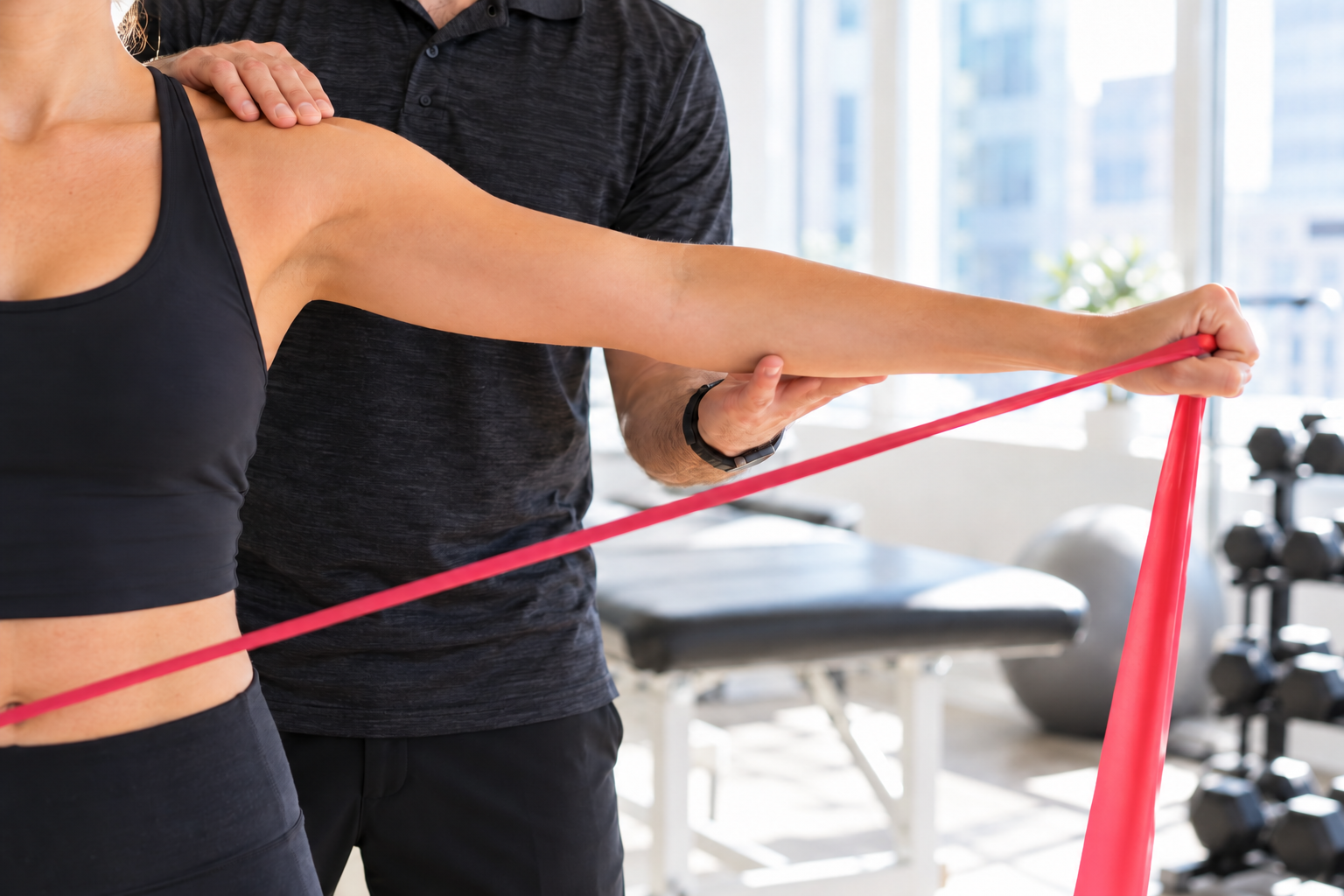
A mild rotator cuff strain may start to feel better within a few weeks, while a tear can take several months to recover. Your recovery timeline depends on the type of injury, your age, activity level, and how consistently you work on rebuilding shoulder strength and motion.
One important distinction: feeling less pain doesn't always mean your shoulder is fully recovered. You may feel comfortable during everyday activities but still lack the strength needed for overhead lifting, exercise, or sports.
What Is a Rotator Cuff Injury?
Your rotator cuff is a group of four muscles and their tendons that help stabilize and move your shoulder. Injuries range from mild strains and tendon irritation to partial or complete tears.
Common symptoms include pain when lifting your arm, weakness during overhead movements, difficulty reaching behind your back, and discomfort when sleeping on the affected shoulder.
How Long Does Rotator Cuff Recovery Take?
There is no single timeline that applies to everyone. Generally, recovery depends on the severity and type of injury:
- Mild rotator cuff strain: Symptoms may begin improving within a few weeks.
- Rotator cuff tendinopathy: Improvement may take several weeks to months.
- Partial or complete tear: Rehabilitation may take several months, depending on the injury and treatment plan.
A torn tendon may not structurally heal without surgery, but many patients can improve shoulder pain and function through appropriate nonsurgical rehabilitation. Significant weakness after a sudden injury should be evaluated promptly.
How Can Physical Therapy Help?
Physical therapy focuses on restoring shoulder movement, strength, and control rather than simply reducing pain temporarily. A treatment plan should address the specific movements and activities that are difficult for you.
At Manhattan Physical Therapy, treatment may include:
- A one-on-one shoulder evaluation to assess mobility, strength, and painful movements.
- Hands-on treatment and guided exercises to improve shoulder motion.
- Progressive strengthening of the rotator cuff and surrounding muscles.
- Adjustments to lifting, reaching, and sleeping positions.
- Gradual return-to-activity training for work, workouts, and sports.
The goal is to help your shoulder tolerate normal activities again without repeatedly aggravating your symptoms.
My Rotator Cuff Recovery: When the Physical Therapist Became the Patient
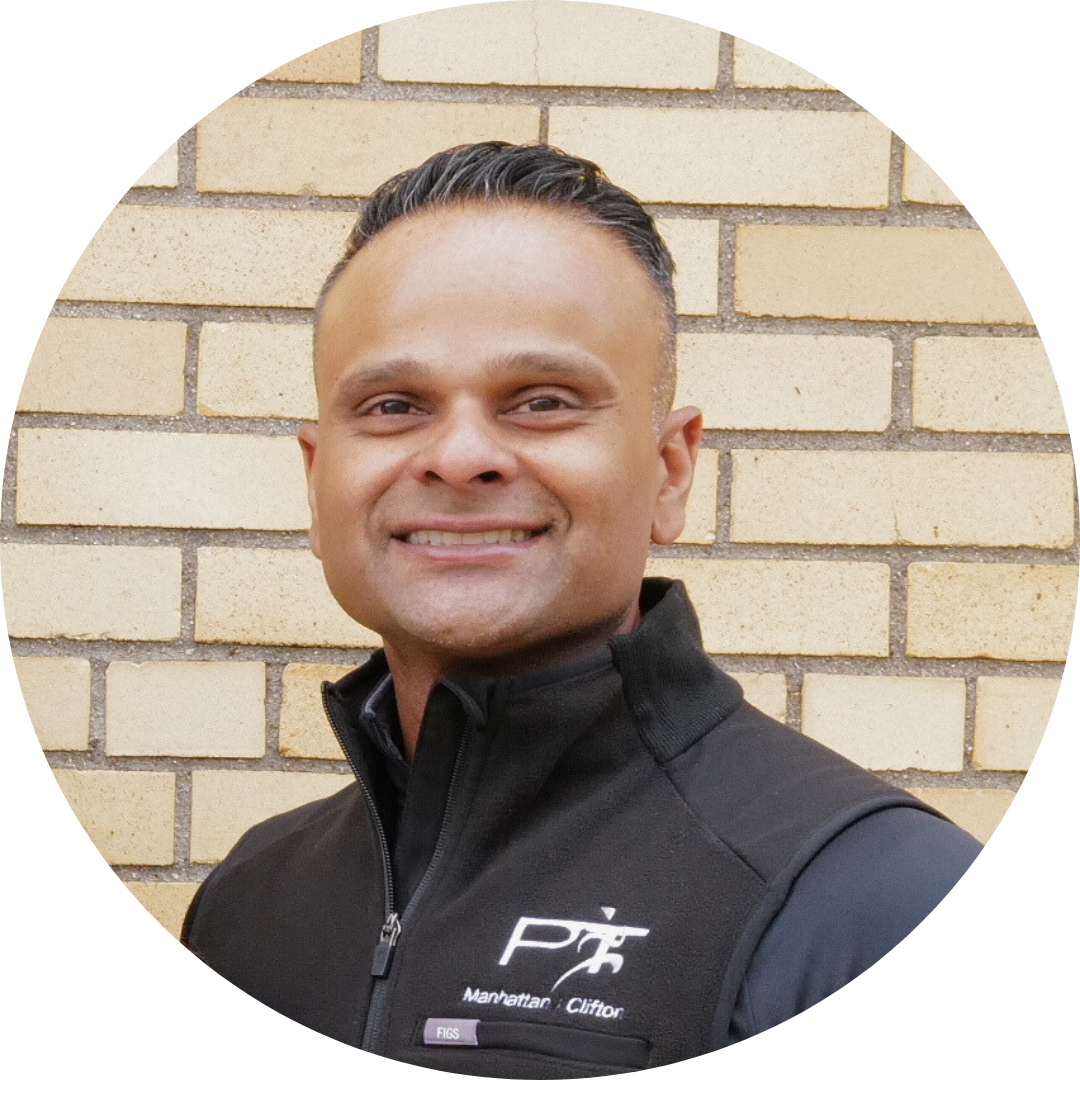
At 40 years old, I found myself on the other side of the treatment table: I needed rotator cuff surgery.
I had spent years helping patients recover from shoulder injuries. Then I became the person struggling to sleep comfortably and put on a jacket without pain.
Going through it myself changed how I understood recovery.
How My Shoulder Problems Caught Up With Me
For years, I managed my shoulder symptoms with rehabilitation and adjustments to my workouts. As a physical therapist, I knew the exercises and could usually keep things manageable.
But my work life was changing. I was spending less time treating patients and more time running a business behind a desk. I noticed my shoulders rounding forward and my posture changing, while I was still asking my body to perform in the gym.
Then, during a front squat, I felt a sharp pain in my shoulder.
I tried to work through it with more rehab. But over the next two months, my shoulder kept feeling like it was popping out. The pain became harder to ignore. Even putting on a jacket hurt.
Imaging eventually showed a full rotator cuff tear along with a labral tear. It was time to discuss surgery.
Choosing Surgery Around My Goals
My surgeon and I talked about what I wanted to get back to.
I wasn't planning to return to competitive throwing. I wanted to work out, stay active, and handle everyday life without shoulder pain.
My surgery included a rotator cuff repair, cleaning up the damaged labrum, and repositioning the biceps tendon. Rather than stitching the SLAP portion of the labrum, my surgeon chose an approach that fit my injury and activity goals.
That was an important lesson: the surgical plan needed to reflect both the damage in my shoulder and what I wanted to do afterward.
The First Two Weeks Were Tough
I tell patients this honestly: for me, the first two weeks were the hardest.
I was sore, uncomfortable, and struggling to sleep. I used a large wedge pillow—the giant "cheese wedge"—to find a tolerable resting position.
Even with my clinical background, knowing what to expect didn't make that part easy. It gave me a much better appreciation for what patients experience at home between appointments.
After those first couple of weeks, things gradually became more manageable. As my need for pain medication decreased under my doctor's guidance, rehabilitation became a bigger part of my routine.
I Knew PT Was Valuable. Then I Needed It Myself.
Being a physical therapist didn't mean I could skip being a patient.
I still needed guidance, hands-on care, and a structured progression. I had to respect the repair and rebuild movement and strength at the appropriate pace.
I was fortunate to have access to physical therapy throughout the week. That support helped me stay consistent, but recovery also required downtime. Resting, icing as directed, and getting sleep mattered, too.
More wasn't always better. Doing the right amount at the right stage was what mattered.
Feeling better also wasn't permission to jump straight back into lifting. Pain relief was one milestone; rebuilding the strength and control to exercise confidently was another.
What I Want My Patients to Know
If you're facing rotator cuff surgery, I understand the questions because I had them myself: How much will it hurt? When will I sleep normally? When can I work out again?
My experience won't be everyone's experience. Your injury, procedure, and surgeon's instructions will shape your recovery. But the lesson I carry into patient care is simple: show up for rehab, follow your home program, communicate when something doesn't feel right, and give your body time to recover.
At Manhattan Physical Therapy, we build rehabilitation around your procedure, your progress, and the activities you want to return to.
For me, that meant getting back to an active life and the gym. For you, it might mean sleeping comfortably, lifting your child, or putting on a jacket without thinking about your shoulder.
Take it from a physical therapist who has been through it: those everyday wins matter—and having the right team beside you makes a difference.
Physical Therapist · Founder, Manhattan Physical Therapy
When Should You Get Your Shoulder Checked?
If shoulder pain continues, interferes with your sleep, or makes lifting and reaching difficult, an evaluation can help determine the next step. Sudden weakness after an injury, especially a fall, deserves prompt medical attention.
Frequently Asked Questions
Can a rotator cuff tear heal without surgery?
A torn tendon may not reattach on its own,
but physical therapy can improve pain,
strength, and function for many patients.
Some injuries require orthopedic evaluation.
Should I exercise with a rotator cuff injury?
Appropriate exercises can support recovery,
but the intensity should match the injury
and your symptoms. A physical therapist
can help guide safe progression.
Can I start physical therapy without
a referral in New York?
Eligible patients can receive treatment
from a qualified physical therapist
without a referral for up to 10 visits
or 30 days, whichever occurs first.
Insurance requirements may differ.
Rotator Cuff Physical Therapy in Midtown Manhattan
Manhattan Physical Therapy offers one-on-one, hands-on physical therapy at 385 5th Ave, New York, NY 10016, near Murray Hill and Grand Central.
If shoulder pain is affecting your everyday routine, an evaluation can help you understand the injury and develop a recovery plan built around your needs.


