

Sports Performance PT in New York, NY | Recover Stronger
Manhattan Physical Therapy
Sports Performance PT in New York, NY | Recover Stronger
Manhattan Physical Therapy
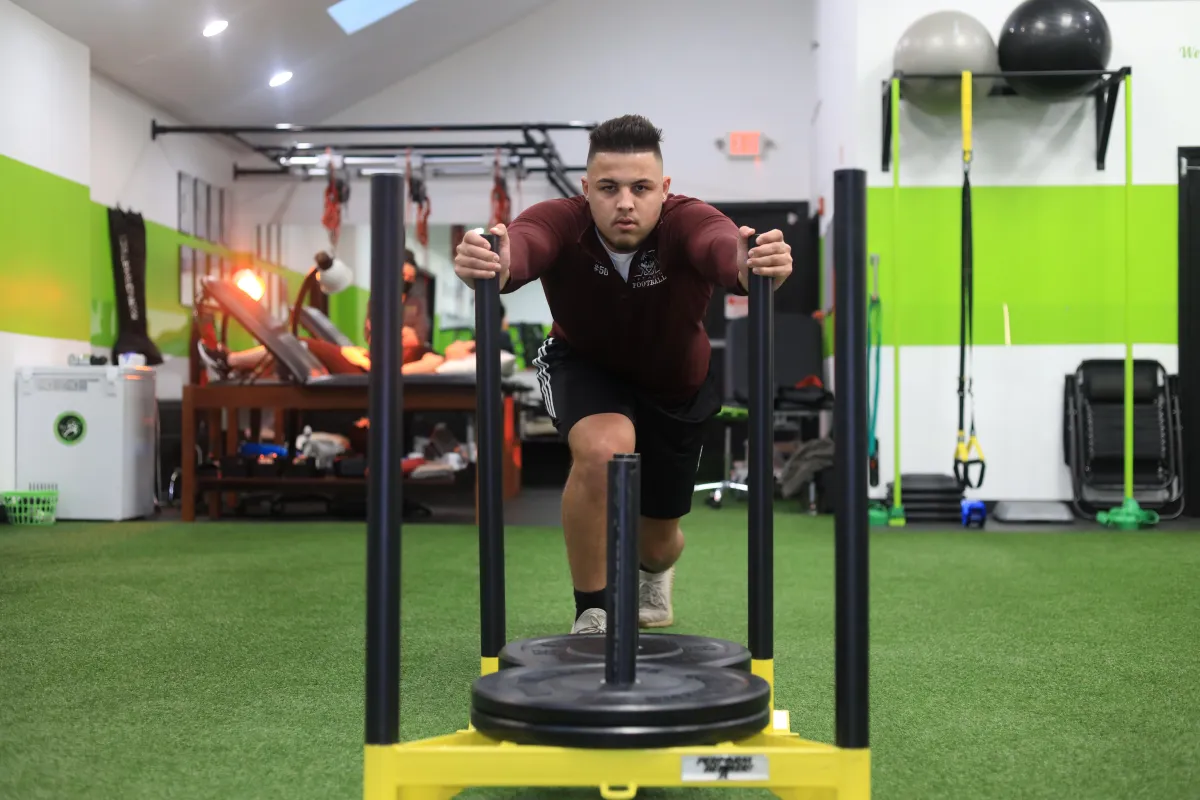
SPORTS PERFORMANCE SERVICES OFFERED
IN NEW YORK, NY
At Manhattan Physical Therapy, our sports performance physical therapy in NYC helps athletes of all levels recover from injuries, improve strength, and prevent re-injury.
At Manhattan Physical Therapy in Midtown Manhattan, skilled physical therapist Tiffany Zarcone, PT, DPT, and her team work with you to help you avoid or heal from injuries and improve your fitness so you can focus on achieving your goals. Reach out to the office in New York City by phone or online today to learn more.
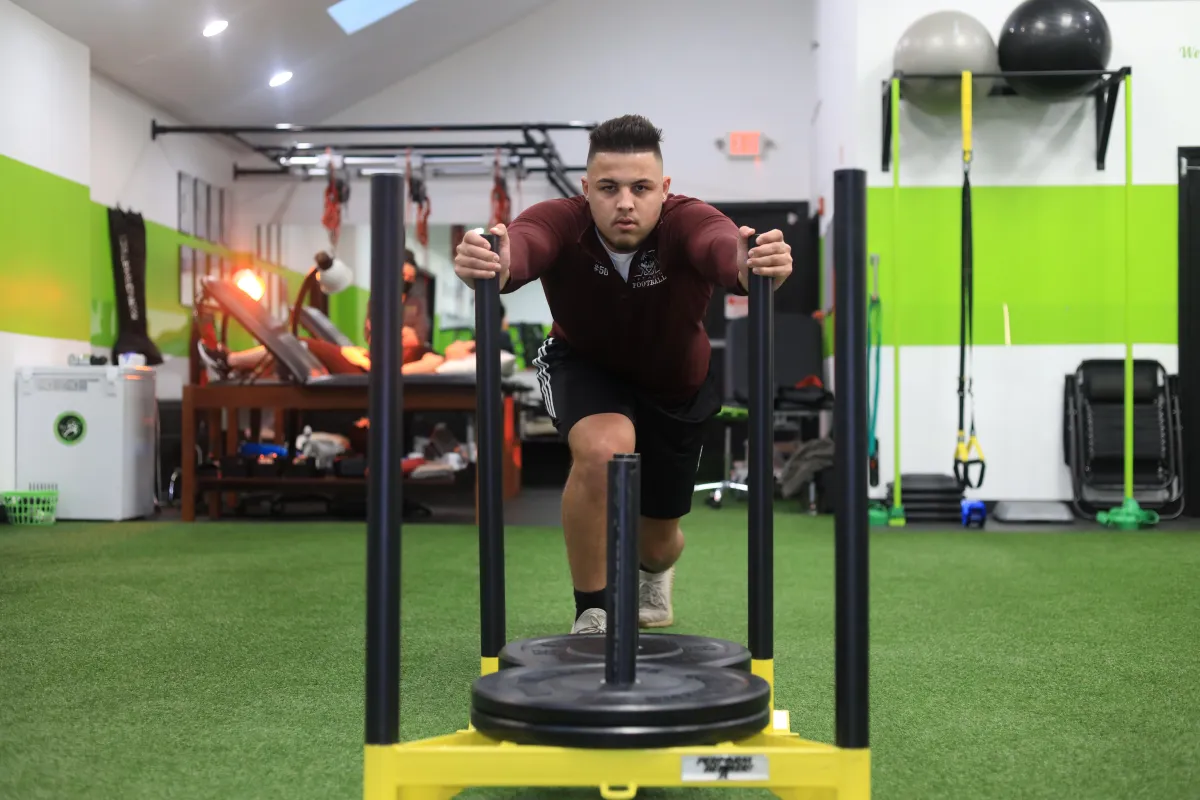
Sports Performance services offered in New York, NY
At Manhattan Physical Therapy, our sports performance physical therapy in NYC helps athletes of all levels recover from injuries, improve strength, and prevent re-injury.
At Manhattan Physical Therapy in Midtown Manhattan, skilled physical therapist Tiffany Zarcone, PT, DPT, and her team work with you to help you avoid or heal from injuries and improve your fitness so you can focus on achieving your goals. Reach out to the office in New York City by phone or online today to learn more.
When “Pain-Free” Isn’t the Same as Ready
You finish physical therapy. Your pain is gone, your range of motion has improved, and you can handle normal daily activities again. On paper, everything looks good.
Then you step back onto the court, field, track, or gym floor and realize something is missing.
Maybe you are hesitant when changing direction. Maybe your jump does not feel as powerful. Maybe you can run, but not at the speed you used to. Or perhaps your body simply does not feel as confident as it did before the injury.
That gap between being able to function and being able to perform is important. For an athlete, walking, climbing stairs, and completing daily activities are only part of the picture. Your body also needs to sprint, decelerate, jump, land, rotate, change direction, absorb force, and repeat those movements when fatigue sets in.
What Is Sports Performance Physical Therapy?
Sports performance physical therapy combines the clinical principles of physical therapy with the training demands of athletics. It can be used after an injury, during a return-to-sport program, or proactively by athletes who want to improve movement and physical capacity.
The distinction is useful because returning to sport and returning to your previous level of performance are not necessarily the same thing. A widely cited sports physical therapy consensus describes return to sport as a progression that can include return to participation, return to sport, and finally return to performance, when an athlete reaches or exceeds their pre-injury level.
A performance-focused PT program may therefore look beyond whether an athlete can perform a basic movement. It asks whether they can perform that movement well enough, quickly enough, and repeatedly enough for their sport.
For example, a basketball player recovering from a knee injury may eventually regain full knee motion and strength for everyday activities. But basketball also requires repeated jumping, landing, cutting, sprinting, stopping, and reacting to an opponent. Those demands need to be progressively reintroduced before the athlete can reasonably expect to feel fully prepared for competition.
How Sports Performance PT Differs From Traditional Rehabilitation
Traditional physical therapy remains an important part of sports rehabilitation. Pain reduction, restoring mobility, rebuilding strength, and regaining normal movement are often necessary first steps.
The difference is what happens after those foundations are restored. A performance-oriented approach gradually moves toward the demands of the athlete's actual activity. Depending on the sport and injury, that may involve:
Progressive strength and power training
Single-leg control and stability
Running and sprint progressions
Jumping and landing mechanics
Acceleration and deceleration
Agility and change-of-direction work
Sport-specific movement patterns
Conditioning and fatigue tolerance
Objective testing before full return to competition
Why Performance-Focused PT Can Matter Even When You Aren’t Injured
You do not have to wait for an injury to benefit from physical therapy.
A recreational runner preparing for a marathon, a high school soccer player entering a new season, or a competitive athlete trying to improve acceleration may have limitations that are not painful but still affect movement and training.
A physical therapist can assess strength, mobility, balance, coordination, movement mechanics, and the physical demands of the athlete's sport. The goal is not to find something wrong with every healthy athlete. It is to understand where the athlete is now and determine what may help them tolerate the demands they are asking of their body.
There is growing evidence supporting this broader approach. A 2026 systematic review and meta-analysis of 25 randomized controlled trials involving 10,124 athletes found that integrative neuromuscular training was associated with lower injury risk and improvements in measures including jumping, sprinting, change-of-direction ability, and dynamic balance. The authors also noted substantial variation between studies and some concerns about study quality, so these results should not be interpreted as a guarantee for every athlete.
What Happens During a Sports Performance PT Program?
A good performance program should not look identical for every athlete. A baseball pitcher, marathon runner, soccer player, and recreational tennis player place very different demands on their bodies.
The process usually starts with a detailed assessment. Your physical therapist may look at strength, mobility, balance, coordination, movement mechanics, previous injuries, training volume, and the specific demands of your sport. From there, treatment progresses according to what you need.
1. Restore the foundation
If you are recovering from an injury, the early stages may focus on pain management, mobility, tissue healing, and basic strength. There is no need to rush past these steps. They provide the foundation for more demanding work later.
2. Build strength and control
Once the basics are in place, exercises become progressively more challenging. This may include resistance training, single-leg exercises, eccentric loading, core work, balance exercises, and movements that require you to control your body under greater loads.
3. Develop power, speed, and agility
This is where rehabilitation begins to look more like athletic training. Depending on your sport, you may progress to jumping, landing, sprinting, cutting, acceleration, deceleration, or rotational movements.
4. Recreate the demands of your sport
The final stages should reflect what you actually do outside the clinic. A runner may need a gradual return to higher-speed running. A basketball player may need repeated jumps and changes of direction. An overhead athlete may need progressive throwing or serving.
The aim is not simply to make an exercise harder. It is to progressively expose your body to the forces, speeds, positions, and workloads it will encounter during sport.
Return to Sport Should Be a Process, Not a Single Test
One of the biggest mistakes athletes can make is treating "cleared" as a finish line.
Sports medicine researchers have described return to sport as a continuum: return to participation, return to sport, and return to performance. An athlete can be participating again without being back to their previous level of performance.
That distinction can change how rehabilitation is approached. Instead of asking only, "Can I play?" a better set of questions might be:
Can I produce enough force for my sport?
Can I control my movements when I am tired?
Can I accelerate and decelerate confidently?
Can I tolerate the training volume I will face?
Can I perform sport-specific movements without hesitation?
Have I rebuilt the strength and physical capacity lost during injury?
There is also a psychological side to returning. An athlete may have adequate physical ability but still hesitate because they are afraid of reinjury. A 2023 systematic review and meta-analysis involving 3,744 patients after ACL reconstruction found that those who returned to sport had significantly higher psychological readiness scores than those who did not.
That does not mean confidence alone determines whether someone is ready. It does show why physical recovery and psychological readiness should not be treated as completely separate issues.
Sports Performance PT for Athletes in New York City
New York athletes have no shortage of ways to stay active. From runners and cyclists to basketball players, tennis players, dancers, and recreational athletes, the city offers plenty of opportunities to train and compete.
It also creates a particular challenge: many people fit training around demanding work schedules, commuting, family responsibilities, and limited recovery time.
A performance-focused physical therapy program can take those realities into account. For a recreational athlete, the goal might be getting through a weekly basketball game without the knee pain that has been building for months. For a competitive athlete, it may involve preparing for a new season after surgery. Someone else may simply want to return to running after years away and build their mileage without repeatedly getting sidelined.
When Should You Consider Sports Performance PT?
You do not need to be injured to make an appointment. Consider a sports performance assessment if:
You are returning to a sport after an injury or surgery.
You feel physically recovered but not fully confident.
Your performance has plateaued.
You repeatedly develop the same aches or injuries.
You are starting a new sport or training program.
You want to prepare for an upcoming season or competition.
You want to understand whether strength or movement limitations are affecting your performance.
If pain, weakness, an old injury, or a lack of confidence is keeping you from performing the way you want, call (212) 213-3480 or text (475) 265-5233 to schedule an evaluation at Manhattan Physical Therapy.
Frequently Asked Questions
Do I need an injury to see a sports performance physical therapist?
No. Sports performance PT can be used by healthy athletes who want to address movement limitations, build strength, prepare for competition, or manage the physical demands of training.
How is sports performance PT different from regular physical therapy?
The clinical foundation is similar, but performance-focused care places greater emphasis on sport-specific demands, athletic capacity, conditioning, and progression toward the activities an athlete wants to perform.
Can sports performance PT help after surgery?
Yes. Post-operative rehabilitation may begin with restoring mobility and basic strength before progressing toward running, jumping, agility, sport-specific movements, and other demands when appropriate.
What if I am pain-free but still don't feel ready?
That is worth discussing with a physical therapist. Pain resolution does not necessarily mean that strength, power, movement control, conditioning, or confidence have returned to the level required for your sport.
Manhattan Physical Therapy
✆ Phone (appointments):
(212) 213-3480
Address: 385 5th Ave, Suite 503, New York, NY 10016


