

Diagnostic Ultrasound Services in NYC
Manhattan Physical Therapy
Diagnostic Ultrasound Services in NYC
Manhattan Physical Therapy
Diagnostics Ultrasound services offered in New York, NY
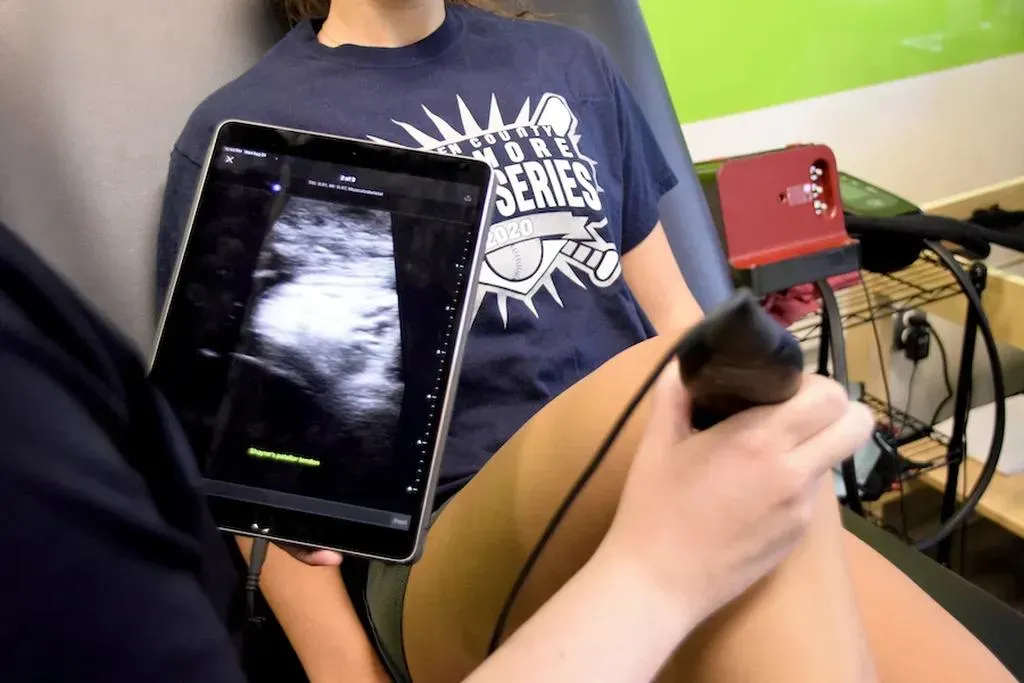
If you’ve been experiencing lingering joint or muscle pain, the first thing you want to know is what’s causing it. At Manhattan Physical Therapy in Midtown Manhattan, skilled physical therapist Tiffany Zarcone, PT, DPT, and her team utilize this quick and safe technology to diagnose issues in athletes or anyone who needs accurate answers for targeted treatments. For more information, call the office in New York City or use online booking today.
Diagnostics Ultrasound services offered in New York, NY
If you’ve been experiencing lingering joint or muscle pain, the first thing you want to know is what’s causing it. At Manhattan Physical Therapy in Midtown Manhattan, skilled physical therapist Tiffany Zarcone, PT, DPT, and her team utilize this quick and safe technology to diagnose issues in athletes or anyone who needs accurate answers for targeted treatments. For more information, call the office in New York City or use online booking today.
When pain lingers, the hardest part is often not the pain itself. It is not knowing exactly what is causing it. You may have tenderness around a shoulder, swelling near a knee, or pain along a tendon, yet a physical examination alone may not always tell the whole story.
Diagnostic ultrasound can provide another piece of that puzzle. Unlike X-rays, which are mainly useful for bones, ultrasound can produce real-time images of many soft-tissue structures, including muscles, tendons, ligaments, nerves and joints. For patients dealing with musculoskeletal pain, that can make it easier to understand what may be happening beneath the skin and determine whether additional evaluation or treatment is needed.
What Is Diagnostic Ultrasound?
Diagnostic ultrasound, also called sonography or ultrasonography, is a noninvasive imaging test that uses high-frequency sound waves to create images of structures inside the body.
During an examination, a clinician places a small handheld device called a transducer against the skin. A thin layer of gel helps the sound waves travel between the probe and your body. The waves bounce back differently depending on the tissues they encounter. The ultrasound system converts those returning signals into images that can be viewed on a screen in real time.
For musculoskeletal problems, ultrasound can be particularly useful for looking at structures close to the skin, such as tendons, muscles, ligaments, nerves and fluid-filled areas around joints.
Another important difference is that ultrasound can show movement. Instead of seeing only a static picture, the clinician can observe how a tendon or other soft tissue behaves while the body part moves.
What Can a Musculoskeletal Ultrasound Show?
The usefulness of diagnostic ultrasound depends on the body part being examined and the clinical question being asked. It is not a test that can identify every possible cause of pain, but it can provide valuable information about many superficial soft tissues. Depending on the situation, ultrasound may help evaluate:
Tendon problems
Muscle injuries
Ligament injuries
Joint and bursal inflammation
Nerve problems
Cysts and soft-tissue masses
Dynamic problems
Research supports the usefulness of musculoskeletal ultrasound for a broad range of soft-tissue conditions, although its accuracy varies depending on the specific injury, the structure being examined and the experience of the person performing and interpreting the examination.
That last point matters. A normal ultrasound does not automatically mean that nothing is wrong. Some structures are too deep to visualize well, and ultrasound cannot look through bone. MRI, X-ray or another form of imaging may be more appropriate when the suspected problem involves deeper structures or bone.
When Might You Need Diagnostic Ultrasound?
Not every episode of pain requires imaging. In many cases, a physical therapist or other healthcare professional can learn a great deal from your symptoms, medical history, movement patterns and physical examination.
Ultrasound may become useful when there is a specific question that imaging can help answer. For example, a healthcare professional may consider ultrasound when you have:
Persistent shoulder pain and concern about a tendon injury
Achilles or other tendon pain
A suspected muscle strain or tear
Localized swelling or a soft-tissue lump
Pain around a joint with suspected fluid or inflammation
Symptoms suggesting a superficial nerve problem
A sports injury where seeing the affected soft tissue could add useful information
Ongoing symptoms that do not fully match the findings of a physical examination
Diagnostic Ultrasound vs. MRI: Are They the Same?
No. Ultrasound and MRI answer different clinical questions, and one is not automatically better than the other.
Ultrasound is particularly useful for superficial soft tissues and has the advantage of real-time imaging. It can also be performed without exposing the patient to ionizing radiation. MRI provides a much broader view of many deep structures and is often more appropriate when the suspected problem involves areas that ultrasound cannot penetrate effectively.
For example, ultrasound has difficulty imaging through bone and has limitations when a structure is located deep within the body. In those situations, another imaging method may be necessary.
What Happens During a Diagnostic Ultrasound?
One of the advantages of ultrasound is that the examination is usually straightforward. For a musculoskeletal scan, you will generally sit or lie in a comfortable position while the clinician exposes the area being examined.
A small amount of water-based gel is placed on your skin. The ultrasound transducer is then moved over the area while images appear on a nearby screen in real time. You may be asked to move the affected joint or muscle during the examination so the clinician can see how the tissues respond to movement.
The procedure itself is generally painless. You may feel some pressure if the clinician needs to examine a tender area, but there is no injection and no recovery period afterward. The supplied clinical reference notes that many ultrasound examinations take about 20 to 45 minutes, depending on the area being evaluated.
Does Diagnostic Ultrasound Use Radiation?
No. Ultrasound uses sound waves rather than ionizing radiation. This is one reason it has become a useful imaging option for many clinical situations.
The sound waves used for diagnostic ultrasound are far above the range that humans can hear. The returning echoes are converted into images by the ultrasound system.
That does not mean ultrasound should be used for every condition. Its usefulness depends on what your healthcare provider is trying to see. Bone and air interfere with ultrasound waves, and deeper structures may not be visible as clearly as they would be with MRI or another imaging method.
Why Real-Time Imaging Can Matter for Pain and Injuries
A picture taken while you are completely still can tell part of the story. Sometimes, however, the more important question is what happens when you move.
This is where real-time ultrasound can be helpful. A clinician may be able to watch a tendon glide, observe a muscle contract, or assess how a soft-tissue structure changes as a joint moves. That information can complement the findings from your history and physical examination.
For someone with shoulder pain, for example, the question may not simply be whether a tendon looks normal at rest. The clinician may also want to understand how the surrounding tissues behave during movement.
That does not make ultrasound a substitute for a physical examination. In fact, the two work best together. Your symptoms, movement limitations, strength, tenderness and functional difficulties provide context for what appears on the screen.
This is also why an imaging finding should not automatically be treated as the explanation for pain. Some tissue changes can occur without causing symptoms. A useful diagnostic process connects the image with what you actually experience.
What Are the Limitations of Diagnostic Ultrasound?
Ultrasound is useful, but it is not an all-purpose imaging test.
The technology works particularly well for many structures near the surface of the body. It becomes less useful when the area of interest is very deep or blocked by bone or gas. For example, ultrasound cannot provide the same view of structures hidden behind bone that MRI or CT can provide.
The quality of an examination can also depend on the skill and experience of the person performing it. The body part being examined, the suspected condition and the equipment used can all affect what can be seen.
For these reasons, your healthcare provider may recommend another imaging test when ultrasound cannot adequately answer the clinical question.
That is not a failure of ultrasound. It is simply a reminder that diagnostic imaging works best when the right test is matched to the right problem.
How Diagnostic Ultrasound Fits Into Physical Therapy
For a patient dealing with an injury, getting an image is only one part of the process. The bigger question is what the information means for your recovery.
A physical therapist may use the findings from an ultrasound examination alongside your medical history and physical assessment to develop a more informed treatment plan. Depending on the problem, treatment may involve therapeutic exercise, manual therapy, movement retraining, activity modification or a gradual return to work, exercise or sport.
The purpose is not to treat an image. It is to treat the person experiencing the problem. For example, if you have persistent tendon pain, the goal is not simply to identify that the tendon looks irritated. Your treatment plan should also address how much you can currently load the tendon, which activities aggravate your symptoms and how your strength and movement can be progressed safely.
When Should You Talk With a Healthcare Professional?
Consider getting evaluated if pain is persistent, keeps returning, limits your normal activities or is accompanied by swelling, weakness or a noticeable change in movement.
You do not necessarily need an ultrasound simply because you have pain. A proper evaluation can help determine whether imaging is appropriate and, if it is, which type of imaging makes sense. If an ultrasound is recommended, ask:
What structure are you evaluating?
What are you looking for?
How could the result affect my treatment?
Would another imaging test provide better information?
What should I do after the examination?
If you’re dealing with persistent pain or a suspected soft-tissue injury, a proper evaluation can help determine whether diagnostic ultrasound is right for you. Call (212) 213-3480 or text (475) 265-5233 to schedule an evaluation and discuss your symptoms with our team.
Manhattan Physical Therapy
✆ Phone (appointments):
(212) 213-3480
Address: 385 5th Ave, Suite 503, New York, NY 10016


