

Ultrasound Physical Therapy in NYC
Manhattan Physical Therapy
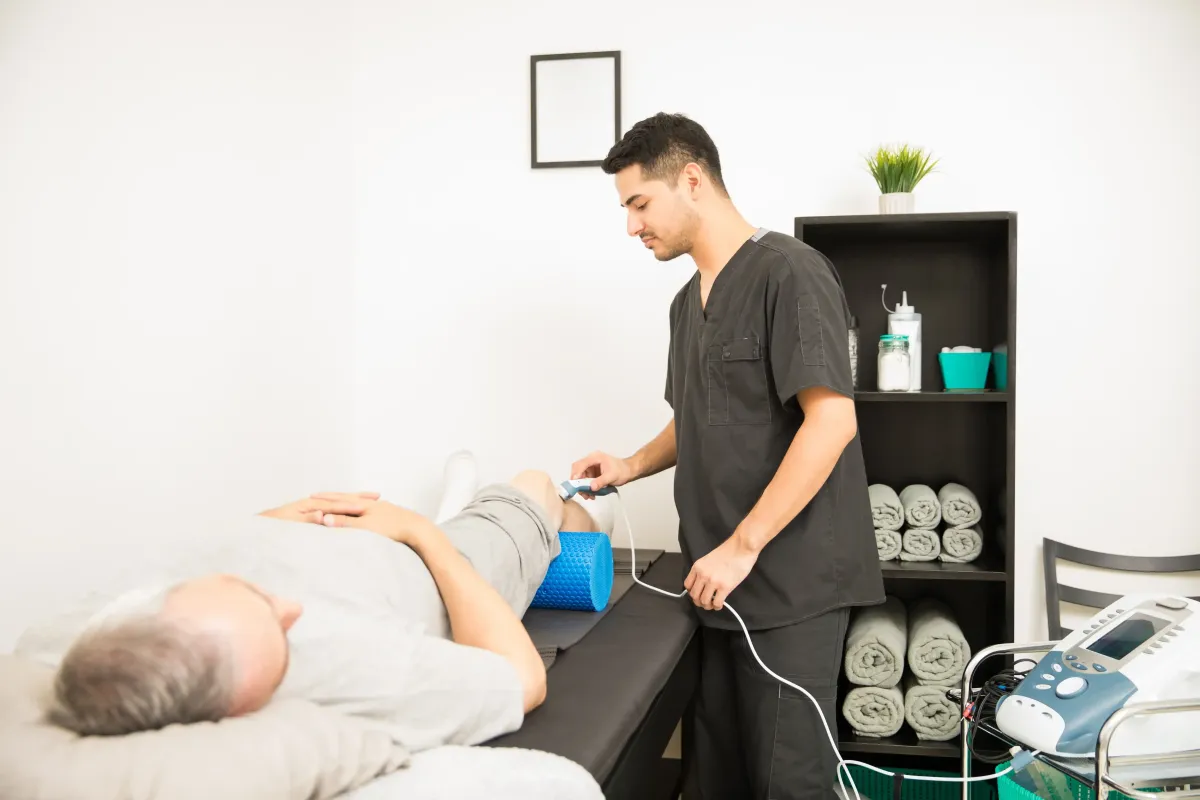
If you have ever had a sore shoulder after a long week at work, a painful knee that makes subway stairs harder, or a stubborn tendon injury that refuses to settle down, you may have heard of ultrasound therapy as part of physical rehabilitation.
Therapeutic ultrasound is a non-invasive treatment that uses high-frequency sound waves to deliver energy into targeted tissues. It is different from the ultrasound used to take pictures of a developing baby or examine an organ. In physical therapy, the goal is treatment rather than imaging.
What Is Ultrasound Physical Therapy?
Ultrasound physical therapy uses a handheld device called a transducer. The therapist applies a small amount of water-based gel to your skin and moves the transducer over the treatment area. Inside the device, crystals vibrate when an electrical current passes through them. Those vibrations produce sound waves that travel into the underlying tissues.
The frequency, intensity, treatment time, and mode can all be adjusted depending on the area being treated and the rehabilitation goal. Your therapist may use different settings for a relatively superficial tendon than for a deeper structure.
You should also know what therapeutic ultrasound is not. It does not produce an image of your muscles, tendons, or joints. That is the job of diagnostic or musculoskeletal ultrasound. Therapeutic ultrasound delivers energy into tissue instead. The machines may look similar, but their purposes and settings are different.
And despite the occasional term “ultrasound massage,” there is no massage taking place. The transducer glides over your skin, but the treatment effect comes from sound-wave energy rather than pressure from the therapist's hands.
How Does Therapeutic Ultrasound Work?
There are two main ways therapeutic ultrasound can affect tissue: thermal and non-thermal effects.
Thermal ultrasound
Continuous ultrasound can produce a gentle heating effect in deeper tissues. As the tissue absorbs the ultrasound energy, its temperature can rise. This may make collagen-rich tissues such as tendons and ligaments more pliable.
That can be useful before stretching, manual therapy, or certain exercises when restricted tissue mobility is part of the problem. For example, imagine someone with a stiff shoulder who cannot comfortably reach overhead. Ultrasound would not rebuild the strength needed to lift the arm. But if the therapist determines that improving tissue flexibility may help, a short treatment could be used before mobility work and exercise.
Pulsed or non-thermal ultrasound
Pulsed ultrasound delivers energy intermittently rather than continuously. The intended effects are primarily mechanical rather than heating the tissue. Your therapist may consider this approach when avoiding additional heat is appropriate.
The distinction matters because ultrasound settings are not interchangeable. Frequency affects how deeply energy is absorbed. Your source notes that 1 MHz is generally used for deeper tissues, while 3 MHz is absorbed more superficially.
A good treatment therefore starts with the condition, not with the machine. The therapist chooses the settings based on the tissue being targeted and the stage of recovery.
What Conditions Can Ultrasound Therapy Help Treat?
Therapeutic ultrasound has been used as part of rehabilitation for a range of musculoskeletal problems, including certain tendon injuries, bursitis, muscle spasms, ligament sprains, plantar fasciitis, frozen shoulder, and scar-tissue restrictions. It may also be considered when limited range of motion is related to tight or less mobile soft tissue.
However, “can be used for” does not mean “will work for everyone.” That distinction is particularly important when looking at the research. Evidence for therapeutic ultrasound varies considerably depending on the condition.
For example, a 2024 systematic review and meta-analysis examined 21 randomized controlled trials involving 1,315 people with knee osteoarthritis. The researchers found improvements in pain and WOMAC function scores with therapeutic ultrasound, although the studies varied considerably in their methods and treatment parameters.
An earlier systematic review of 10 randomized trials involving 645 patients with knee osteoarthritis also found improvements in pain and physical function, with no ultrasound-related adverse events reported in those trials.
That does not mean ultrasound should automatically be added to every knee treatment plan. A 2021 review found only four eligible sham-controlled studies involving 234 participants and rated the overall quality of evidence as very low. The authors concluded that the available evidence was not strong enough to make meaningful clinical recommendations.
What Happens During an Ultrasound Therapy Session?
Therapeutic ultrasound is usually a simple treatment. Before starting, your physical therapist examines the area and considers your symptoms, movement, medical history, and overall rehabilitation goals. The treatment is then directed at a specific area rather than being applied randomly.
You will usually sit or lie in a comfortable position while the therapist exposes the part of the body being treated. A small amount of ultrasound gel is applied to the skin. The therapist then moves the transducer continuously over the treatment area in slow, controlled movements.
A typical treatment may take around 5 to 10 minutes per area, although the exact duration depends on the condition and the settings being used. Most people do not find the treatment painful. With continuous ultrasound, you may notice mild warmth. With pulsed ultrasound, you may feel very little, sometimes only a faint sensation. You should not experience sharp or excessive heat. If you do, tell your therapist immediately so the settings or technique can be adjusted.
The important part comes after the ultrasound. Depending on your condition, your therapist may follow it with stretching, joint mobility work, strengthening exercises, manual therapy, or movement retraining.
Is Ultrasound Therapy Safe?
For most appropriate patients, therapeutic ultrasound has a relatively low risk of complications when it is applied correctly. The most important practical concern is excessive heating, particularly if the transducer is held in one place for too long. Keeping the device moving helps reduce this risk.
There are situations where therapeutic ultrasound should be avoided or used only after careful clinical consideration. These include treatment directly over areas of active cancer, the pregnant uterus, open wounds or active infections, certain implanted electronic devices, and some areas where sensation is significantly impaired.
This is one reason an ultrasound treatment should not simply be copied from something you saw online. The settings and treatment area matter, and your therapist needs to determine whether the modality is appropriate for you.
Ultrasound Therapy vs. Other Physical Therapy Treatments
It is easy to think of ultrasound as a replacement for exercise or hands-on treatment because the machine itself is the most noticeable part of the session. In practice, it is usually more useful as an adjunct.
Consider someone with a stiff shoulder. Ultrasound may be used to prepare the tissues before mobility exercises. But the exercises are what progressively challenge the shoulder's range of motion and strength.
The same principle applies to a knee problem. If pain is preventing someone from exercising comfortably, a therapist may use a passive modality as part of the session and then work toward strengthening the muscles around the knee, improving balance, and restoring everyday movement.
What Can You Expect From Physical Therapy?
Living and working in New York City can make a minor injury surprisingly disruptive. A painful knee can make stairs and long walks uncomfortable. Shoulder pain can interfere with carrying a laptop bag or reaching for something on a high shelf. A stubborn tendon problem can make your usual workout feel impossible.
The goal of physical therapy should therefore extend beyond temporarily making an area feel better.
At Manhattan Physical Therapy, ultrasound may be incorporated when the therapist believes it can support the larger treatment plan. The session may combine the modality with therapeutic exercise, manual techniques, flexibility work, strengthening, or other appropriate interventions.
If persistent pain, stiffness, or an injury is interfering with your work, exercise, or everyday life, a physical therapy evaluation can help determine which treatments make sense for your situation. Call Manhattan Physical Therapy at (212) 213-3480 to schedule an evaluation in NYC.
Frequently Asked Questions
Can ultrasound therapy heal an injury by itself?
No. Therapeutic ultrasound is a passive modality. It may support pain management or tissue preparation, but it does not replace strengthening, mobility work, or other active rehabilitation.
Is therapeutic ultrasound the same as an ultrasound scan?
No. Diagnostic ultrasound creates images of structures inside the body. Therapeutic ultrasound delivers sound-wave energy to tissue and does not produce diagnostic images.
Is ultrasound effective for every type of pain?
No. Research varies substantially by condition. Evidence is relatively more supportive for some knee osteoarthritis outcomes, while evidence for conditions such as chronic non-specific low back pain is much less convincing.
Manhattan Physical Therapy
✆ Phone (appointments):
(212) 213-3480
Address: 385 5th Ave, Suite 503, New York, NY 10016


