

Dry Needling for Plantar Fasciitis in NYC
Manhattan Physical Therapy
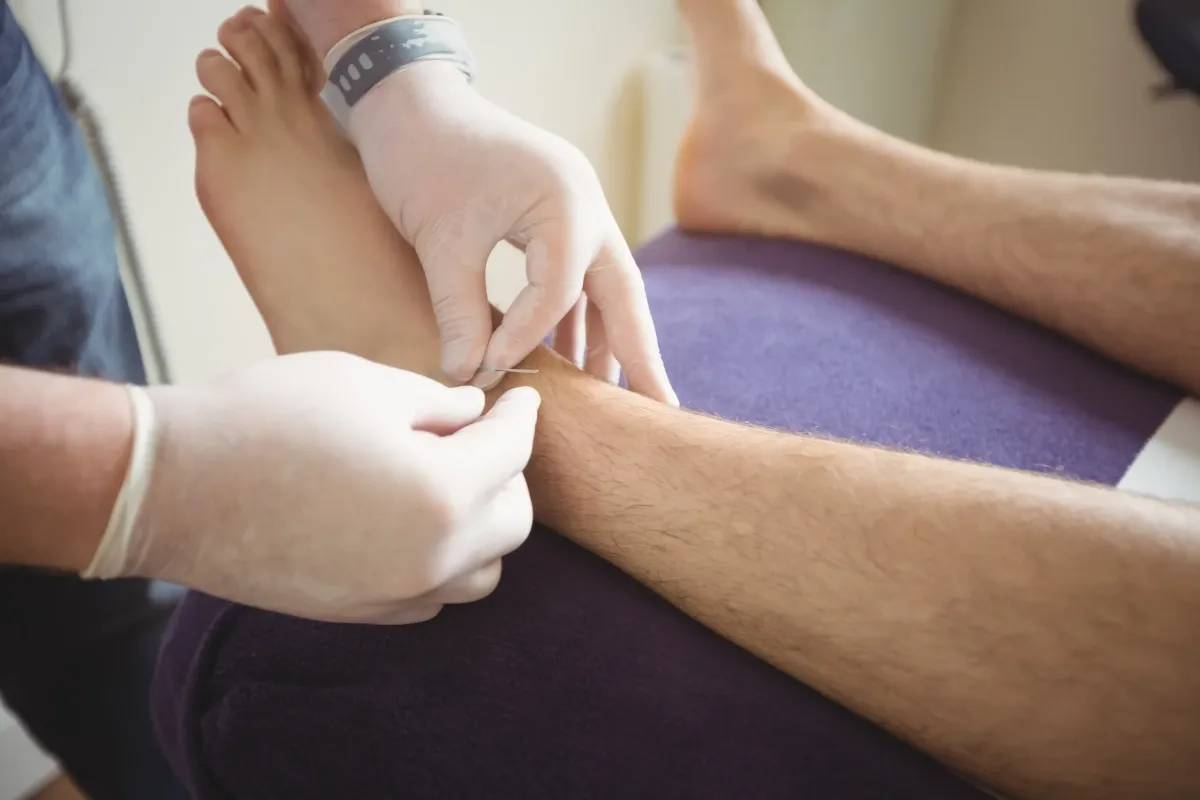
Neck painHeel pain can make even short walks through New York City feel exhausting. If your first few steps in the morning feel sharp, stiff, or painful, plantar fasciitis may be the reason. At Manhattan Physical Therapy, we use evidence-based treatments including dry needling to help reduce pain, improve mobility, and support long-term recovery without relying only on medication or injections.
Research has shown that dry needling may help reduce heel pain and improve foot function in people with plantar fasciitis, especially when combined with physical therapy and corrective exercises.
Why Does Plantar Fasciitis Cause Heel Pain?
Plantar fasciitis develops when the plantar fascia becomes irritated from repeated stress and overload. The plantar fascia is a thick band of tissue that runs from the heel to the front of the foot. Its job is to support the arch and absorb force while standing, walking, and running. When the tissue is strained beyond its ability to recover, tiny tears and inflammation can develop. Over time, the fascia may become tight, irritated, and less flexible. This often leads to:
Sharp heel pain during the first steps in the morning
Pain after sitting for long periods
Foot stiffness after exercise
Discomfort during walking or climbing stairs
Tenderness along the bottom of the heel
What Increases the Risk of Plantar Fasciitis?
Several factors can place extra stress on the plantar fascia and surrounding muscles. Some people develop heel pain from one cause, while others experience a combination of issues. Common risk factors include:
Standing for long hours at work
Walking on hard surfaces daily
Tight calf muscles
Flat feet or high arches
Running and high-impact sports
Poor footwear support
Limited ankle mobility
Excess body weight
Muscle imbalances in the legs and hips
What Is Dry Needling?
Dry needling is a modern physical therapy technique used to reduce muscle tension, improve movement, and relieve pain. During treatment, a licensed physical therapist inserts very thin sterile needles into tight bands of muscle called trigger points.
These trigger points can develop from overuse, stress, poor posture, repetitive movement, or compensation patterns caused by pain. In plantar fasciitis cases, trigger points commonly form in the calf muscles, foot muscles, and lower leg.
Unlike injections, dry needling does not involve medication. The goal is to stimulate the nervous system and help the muscle relax naturally.
Patients with plantar fasciitis often experience tightness in the calf muscles that increases pulling stress on the plantar fascia. Releasing those tight areas can reduce tension on the heel and improve walking comfort.
How Does Dry Needling Help Plantar Fasciitis?
Dry needling focuses on the muscular and mechanical contributors to heel pain rather than only masking symptoms.
When the needle reaches a trigger point, the muscle may briefly twitch and then relax. This response can help improve blood flow, decrease muscle guarding, and reduce pain sensitivity in the area. For plantar fasciitis, dry needling may help by:
Reducing tension in the calf and foot muscles
Improving ankle and foot mobility
Decreasing stress placed on the plantar fascia
Improving walking tolerance
Reducing chronic heel pain
Supporting faster recovery alongside physical therapy
Studies on plantar fasciitis treatment have reported meaningful improvements in pain scores and foot function following dry needling treatment. Research also suggests that patients often experience better results when dry needling is combined with stretching, strengthening exercises, and movement correction.
What Happens During Dry Needling Treatment for Plantar Fasciitis?
Dry needling sessions are typically short and performed as part of a larger physical therapy treatment plan. Your physical therapist will first evaluate your foot mechanics, walking pattern, ankle mobility, calf tightness, and muscle imbalances contributing to heel pain. During treatment, you may sit or lie comfortably while the therapist identifies tight muscles and trigger points in areas such as:
The calf muscles
The arch of the foot
The heel region
Supporting muscles in the lower leg
Once the skin is cleaned, thin sterile needles are inserted into the targeted muscles. Some patients feel a mild twitch response, pressure, or temporary ache when the trigger point is stimulated. Others barely feel the needle at all.
Depending on your condition, the needles may stay in place for several seconds or several minutes. Some soreness afterward is normal and usually fades within a day or two.
Does Dry Needling Hurt?
Most patients tolerate dry needling very well. The needles used are much thinner than those used for injections or blood draws.
You may experience:
A quick pinching sensation
Mild cramping or twitching
Temporary muscle soreness afterward
Dry Needling vs. Acupuncture for Heel Pain
Although both treatments use thin needles, dry needling and acupuncture are based on different medical approaches.
Acupuncture comes from traditional Chinese medicine and focuses on restoring energy flow throughout the body using meridian points.
Dry needling is rooted in modern musculoskeletal and neurophysiological principles. Physical therapists use it to target trigger points, muscle tension, movement restrictions, and pain patterns affecting the muscles and connective tissues.
For plantar fasciitis, dry needling is often used to address tight calf muscles, restricted ankle mobility, and muscle dysfunction contributing to heel pain.
Why Physical Therapy Matters Alongside Dry Needling
Dry needling can help reduce pain, but plantar fasciitis often develops because of underlying movement problems that also need attention. That is why physical therapy is important for long-term recovery. At Manhattan Physical Therapy, treatment may include:
Stretching for tight calf muscles and plantar fascia
Foot and ankle strengthening exercises
Balance and stability training
Gait and walking assessment
Manual therapy
Mobility exercises
Activity modification guidance
Footwear recommendations
Who Can Benefit From Dry Needling for Plantar Fasciitis?
Dry needling may help patients who:
Have ongoing heel pain despite rest
Experience morning heel stiffness
Feel pain after standing or walking
Have tight calf muscles
Have chronic plantar fasciitis symptoms
Want to avoid more invasive procedures
Need support returning to sports or exercise
Persistent heel pain should not control your daily routine. If walking, exercising, or standing has become painful, dry needling combined with physical therapy may help you move more comfortably again.
Call us at (212)-213-3480 to schedule an evaluation for plantar fasciitis treatment in NYC.
What Do They Say About Us?
Alexander Liu
"Everyone on the team at Manhattan Physical Therapy is super nice and caring. They were able to pretty quickly diagnose my knee and hip problems and immediately put me to work to reduce the pain.."
Henry Myerberg
"You're not just a patient when you come to the Manhattan Physical Therapy. You feel like family there. In particular, Erica with her colleagues John, Lidia and Joe not only fix and improve you physically, they make you feel welcomed and cared for.."
Hakyung Kim
"Everyone is so kind and helpful! my knee and hip pain have improved massively since starting Manhattan PT, highly recommend to anyone. special thanks to Bianca, Lidia, Joe, and John!"
Manhattan Physical Therapy
✆ Phone (appointments):
(212) 213-3480
Address: 385 5th Ave, Suite 503, New York, NY 10016


