

Acupuncture for Gluteus Medius Pain in NYC
Manhattan Physical Therapy
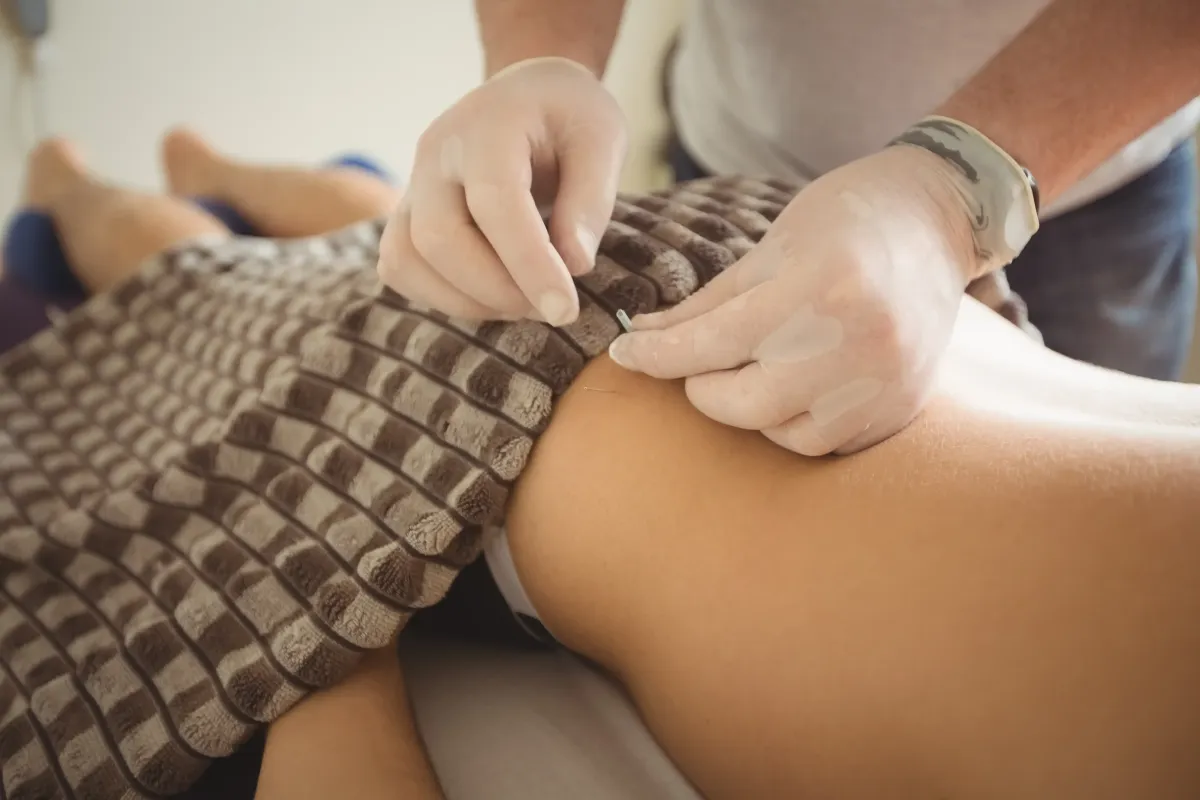
Pain around the outer hip or upper buttock can be surprisingly difficult to pinpoint. You may feel it when climbing stairs, standing on one leg, getting out of a chair, or lying on the painful side at night. Sometimes the discomfort feels like it is coming from the hip joint or lower back, even when the gluteus medius is contributing to the problem.
For people in NYC who walk extensively, run, exercise regularly, or spend long hours sitting at a desk, irritation of this muscle can interfere with much more than a workout. A sore gluteus medius can make a normal commute, a flight of stairs, or even sleeping on your side uncomfortable.
Acupuncture may be used as part of a broader treatment plan to help manage this pain, particularly when muscle sensitivity or myofascial trigger points are involved. Research on acupuncture for musculoskeletal pain has found meaningful reductions in pain, although the evidence is not specific enough to say that acupuncture will work for every case of gluteus medius pain.
What Is the Gluteus Medius?
The gluteus medius is one of the three major muscles of the buttocks. It sits along the outer surface of the pelvis and attaches to the greater trochanter, the bony prominence you can feel on the outside of your upper thigh. Its main job is to move the leg away from the body's midline and help keep the pelvis level when you stand or walk.
That stabilizing role is easy to overlook. Every time you take a step, climb stairs, run, or balance on one leg, the gluteus medius helps control the movement of your pelvis and hip. Its front and back fibers also contribute to different hip rotation and movement patterns.
When the muscle becomes overloaded, weak, irritated, or excessively tight, the problem may show up as pain around the buttock, outer hip, or sometimes the lower back. A person may also notice weakness when moving the leg sideways, difficulty with single-leg activities, or discomfort when lying on the affected side.
Importantly, pain in this area does not automatically mean the gluteus medius is the source. Gluteal tendinopathy, hip joint problems, lumbar spine conditions, sacroiliac joint pain, and other disorders can produce similar symptoms. Gluteal tendinopathy, for example, is a common cause of lateral hip pain and can vary considerably in severity.
What Causes Gluteus Medius Pain?
There is rarely one explanation for every case. A sudden fall or sports injury can strain the muscle, while repetitive loading can gradually irritate it. Runners, cyclists, dancers, and other active people may notice symptoms after increasing their training volume or changing their routine.
Long periods of sitting can also contribute to discomfort, particularly when combined with poor movement habits or weakness around the hip. Your gluteus medius does not have to be completely injured for it to become painful. Repeatedly asking the muscle to stabilize the pelvis without enough strength, recovery, or load tolerance can be enough to create symptoms. Common contributors include:
Overuse
A sudden injury
Weakness or poor hip control
Prolonged sitting or standing
Gluteal tendinopathy
Myofascial trigger points
The location of the pain can sometimes provide clues. Gluteus medius trigger points have been described as referring pain toward the lower back, sacrum, iliac crest, and buttock. Symptoms may become noticeable during walking, prolonged single-leg weight bearing, side sleeping, or after certain sports activities.
Can Acupuncture Help Gluteus Medius Pain?
Acupuncture uses very thin needles placed at selected points to influence pain and other symptoms. For gluteus medius pain, treatment may be directed toward the painful region or other clinically relevant areas identified during an evaluation.
The evidence is strongest for acupuncture as a treatment for several types of musculoskeletal pain rather than specifically for isolated gluteus medius pain. A large individual-patient-data meta-analysis involving 20,827 patients from 39 randomized trials found acupuncture produced greater improvements in chronic pain than both sham acupuncture and no acupuncture, although the difference from sham treatment was smaller.
Another meta-analysis of 63 randomized trials involving 6,382 people found a moderate pooled effect for pain relief immediately after treatment for musculoskeletal pain, with a standardized mean difference of −0.61 (95% CI −0.76 to −0.47).
There is also research more closely related to the gluteus medius itself. In a 2022 randomized clinical trial, 80 people with nonspecific low back pain received either dry needling or ischemic compression targeting gluteus medius trigger points. The dry-needling group showed improvements in pressure pain threshold that were maintained at 48 hours and one week. This study examined dry needling rather than traditional acupuncture, so its findings should not be treated as direct proof that acupuncture will resolve gluteus medius pain.
What Happens During Acupuncture for Gluteus Medius Pain?
Your first visit should start with more than simply placing needles where it hurts.
The clinician should ask when the pain began, what movements aggravate it, whether you have recently changed your exercise routine, and whether symptoms extend into the back or leg. They may also assess hip strength, range of motion, walking mechanics, and movements such as standing on one leg.
This matters because pain over the gluteus medius does not necessarily mean the muscle itself is injured. For example, pain on the outside of the hip can be associated with gluteal tendinopathy, while pain extending farther down the leg may require consideration of the lumbar spine or other structures.
Once the likely pain generator has been identified, thin sterile needles can be placed at selected acupuncture points. Depending on the clinical findings, treatment may focus on the gluteal region or include points farther away from the painful area.
Acupuncture and Physical Therapy
One of the more useful ways to think about acupuncture is as a potential addition to rehabilitation rather than a replacement for it.
Suppose your hip hurts enough that you avoid stairs, running, or even lying on one side. That reduced activity can make it harder to rebuild strength and confidence. If acupuncture helps lower your symptoms, you may be able to participate more comfortably in the exercises designed to improve hip strength and movement control.
This is particularly relevant when the problem involves gluteal tendinopathy. A well-designed randomized trial involving 204 adults with gluteal tendinopathy compared education plus exercise, corticosteroid injection, and a wait-and-see approach. After eight weeks, 77.3% of participants receiving education plus exercise reported successful improvement, compared with 29.4% in the wait-and-see group. Pain was also lower in the exercise and education group. At 52 weeks, the education-and-exercise group continued to have a higher rate of reported improvement than the injection group.
That does not mean every person with gluteus medius pain has tendinopathy, or that acupuncture is unnecessary. It means treatment should address the reason the tissue is struggling, not only the sensation of pain. Depending on your evaluation, a treatment plan may include:
Acupuncture for pain management
Progressive strengthening of the hip abductors and surrounding muscles
Exercises to improve single-leg control
Activity or training modifications
Education about positions that aggravate the hip
Manual therapy or other physical therapy techniques when appropriate
Gradual return to running, sports, or other activities
When Should You See a Professional for Gluteus Medius Pain?
A mild ache after an unusually long walk or demanding workout may settle with relative rest and gradual return to activity. Persistent or worsening pain deserves a closer look. Consider an evaluation if you have:
Pain that continues for several weeks
Increasing pain when walking, climbing stairs, or exercising
Difficulty lying on the affected side
Noticeable weakness when moving the leg outward
A limp or change in your walking pattern
Pain that repeatedly returns when you resume activity
Pain accompanied by numbness, tingling, or symptoms extending down the leg
Some symptoms warrant more prompt medical attention. Severe pain following significant trauma, an inability to bear weight, progressive weakness, fever, or new bowel or bladder problems should not be treated as a routine muscle problem.
If persistent outer-hip or buttock pain is affecting your daily activities, an evaluation can help determine whether the gluteus medius is involved and what treatment approach makes sense for you. Call (212) 213-3480 to schedule an appointment in NYC.
Manhattan Physical Therapy
✆ Phone (appointments):
(212) 213-3480
Address: 385 5th Ave, Suite 503, New York, NY 10016


