

Torn Calf Muscle Treatment in NYC
Manhattan Physical Therapy
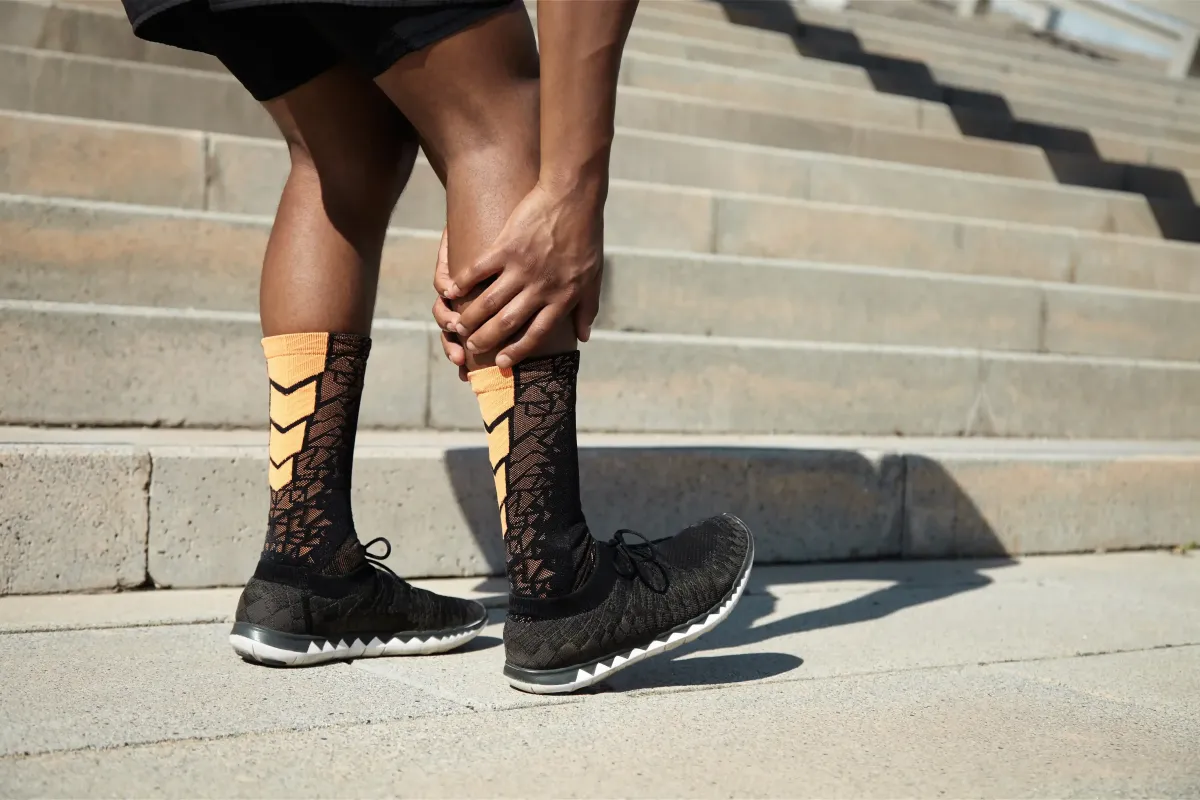
What Is a Torn Calf Muscle?
A torn calf muscle happens when one of the muscles in the back of your lower leg overstretches and the fibers partially or fully tear. The two main muscles—the gastrocnemius and soleus—run from the back of your knee down to your heel and play a major role in walking, running, climbing stairs, and keeping your balance.
A tear is considered a more severe form of strain. It can develop after a sudden push-off, jump, or abrupt stop, but it may also come from overworking tight or weak calf muscles over time. Because the calf spans two joints—the ankle and the knee—these muscles face higher stress, making them especially vulnerable to injury.
What Symptoms Should You Look For?
People with a torn calf muscle typically notice symptoms right away. Common signs include:
A sharp pain in the back of the lower leg, often described as feeling like someone kicked you
Difficulty pushing off the ground or rising onto your toes
Sudden weakness or loss of calf strength
Swelling or bruising that develops over hours or days
A snapping or popping sensation at the moment of injury
Visible indentation where the tear occurred in more serious cases
Source: Cleveland Clinic
What Causes a Torn Calf Muscle?
A calf tear usually happens when the muscle overstretches beyond its capacity. In New York, this injury is common among runners, recreational athletes, and people who spend long hours on their feet.
Frequent causes include:
Explosive movements such as sprinting or jumping
Quick direction changes during sports like basketball or tennis
Increasing activity without proper warm-up or conditioning
Returning to exercise too soon after a previous calf injury
Tight calves due to prolonged sitting or limited mobility
Although anyone can experience a tear, the risk is higher for individuals over 40 and those with chronically tight calves.
How Are Torn Calf Muscles Diagnosed?
At Manhattan Physical Therapy, clinicians begin with a detailed evaluation that includes reviewing your symptoms, assessing your range of motion, and palpating the calf to identify painful or tender areas.
A torn calf muscle can sometimes resemble other lower-leg issues such as:
Achilles tendon rupture
Deep vein thrombosis (DVT)
Compartment syndrome
A burst Baker’s cyst
If the injury is unclear, imaging may be recommended. Diagnostic tools used in NYC include:
Doppler ultrasound to evaluate soft tissues and blood flow
MRI to differentiate muscle tears from tendon or ligament problems
Stretches and Exercises
Calf Stretch (Back Knee Straight)
Stand facing a wall, placing your hands on it for support (a chair or counter also works).
Step one leg back, keeping both feet pointed forward.
Keep the back knee straight and the back heel pressed into the floor.
Bend the front knee and lean your hips and chest slightly toward the wall until you feel a stretch in the back calf.
Hold for 15–30 seconds.
Repeat 2–4 times per leg.
Calf Stretch (Both Knees Bent)
Stand with your hands supported on a wall, chair, or counter.
Step one leg behind the other, toes still pointing forward.
Keep both heels on the ground.
Bend both knees and gently lean forward until you feel a stretch in the lower part of your back calf.
Hold for 15–30 seconds.
Repeat 2–4 rounds on each leg.
Bilateral Calf Stretch (Knees Straight)
Place a thick book or wedge 3–4 inches from a wall or counter.
Stand with the balls of your feet on the book, heels on the floor.
Keep your knees straight as you lean forward until a stretch is felt in both calves.
Increase the stretch by using a thicker book if needed.
Hold for 15–30 seconds.
Repeat 2–4 times.
Bilateral Calf Stretch (Knees Bent)
Stand with the balls of your feet on a book, heels touching the floor.
Stay within reach of a wall or counter for balance.
Bend both knees slightly while leaning forward into the stretch.
Adjust the book height for a stronger stretch if needed.
Hold for 15–30 seconds.
Repeat 2–4 times.
Ankle Plantar Flexion
Sit on the floor with your injured leg straight and the other leg bent for support.
Point the toes of your straight leg downward in a slow, controlled motion.
Return to the starting position.
Perform 8–12 repetitions on each leg.
Ankle Dorsiflexion
Sit with your injured leg extended and the opposite leg bent.
Pull your toes upward toward your shin, keeping your knee straight.
Slowly lower your foot back down.
Repeat 8–12 times for each leg.
Heel Raise on a Step
Stand on a step with the balls of your feet on the edge and your heels hanging off.
Hold the railing or wall for balance.
Keep both knees straight and lift your heels as high as you can.
Slowly lower your heels below step level until you feel a stretch.
Return to the starting height.
Repeat 8–12 repetitions.
Which Physical Therapy Methods Help Torn Calf Muscles Heal?
Recovering from a torn calf muscle requires more than rest and basic stretching. A structured rehabilitation plan helps the muscle fibers heal correctly, reduces the risk of future injuries, and restores strength for walking, climbing stairs, commuting, and athletic activities. Below is a deeper look at the methods commonly used during calf tear rehabilitation.
Manual Therapy
Hands-on treatment is often one of the first steps in recovery. Your therapist may use techniques such as soft-tissue mobilization, trigger point release, or gentle myofascial work to:
Reduce muscle tightness and guarding
Improve circulation to encourage healing
Break down adhesions that limit mobility
Help the calf relax so you can begin stretching safely
Manual therapy also helps ease stiffness around the ankle and knee, which often become restricted after a calf tear.
Stretching and Flexibility Work
Torn muscle fibers shorten and tighten as they heal, so restoring flexibility is crucial. Your therapist will introduce stretches gradually, beginning with light mobility work and progressing to deeper calf stretches.
You may work on:
Gastrocnemius stretches (knee straight) to improve upper-calf flexibility
Soleus stretches (knees bent) to target deeper calf tissues
Inclined or elevated foot stretches to enhance lengthening of the entire muscle group
These stretches help restore proper stride length, reduce soreness during walking, and prevent recurrent tears.
Strengthening Exercises
Strengthening the calf complex is essential for long-term recovery. Weakness can lead to instability, altered walking patterns, and repeat injuries.
Rehab typically begins with gentle activation exercises and progresses to functional strengthening. Common exercises include:
Ankle plantar flexion
Ankle dorsiflexion
Controlled heel raises (flat or elevated)
Your therapist will adjust repetitions, resistance, and technique based on your healing stage.
Neuromuscular Training
A calf tear affects more than the muscle—it also disrupts the communication between your brain, nerves, and leg muscles. Neuromuscular retraining helps restore this connection. Therapy may involve:
Light hopping or bounding drills (once safe)
Direction-change movements
Single-leg balance tasks
Foot-placement exercises to improve coordination
Gait and Balance Training
A torn calf often changes the way you walk. Without proper retraining, this can lead to knee, hip, or foot problems later on. Your therapist will assess your walking pattern and work with you on:
Restoring normal heel-to-toe motion
Improving push-off strength
Correcting limping or compensations
Ensuring symmetry between both legs
When Should You Seek Medical Care?
You should contact a healthcare provider or a physical therapist if you experience:
Difficulty walking or bearing weight
An inability to rise onto your toes
Persistent or worsening calf pain
Significant swelling or bruising
Trouble bending or pointing your ankle
Call us at (212)-213-3480 or book your appointment online to find relief.
What others are saying
Alexander Liu
"Everyone on the team at Manhattan Physical Therapy is super nice and caring. They were able to pretty quickly diagnose my knee and hip problems and immediately put me to work to reduce the pain.."
Henry Myerberg
"You're not just a patient when you come to the Manhattan Physical Therapy. You feel like family there. In particular, Erica with her colleagues John, Lidia and Joe not only fix and improve you physically, they make you feel welcomed and cared for.."
Hakyung Kim
"Everyone is so kind and helpful! my knee and hip pain have improved massively since starting Manhattan PT, highly recommend to anyone. special thanks to Bianca, Lidia, Joe, and John!"
Manhattan Physical Therapy
✆ Phone (appointments):
(212) 213-3480
Address: 385 5th Ave, Suite 503, New York, NY 10016


