

Physical Therapy for Plantar Fasciitis in NYC
Manhattan Physical Therapy
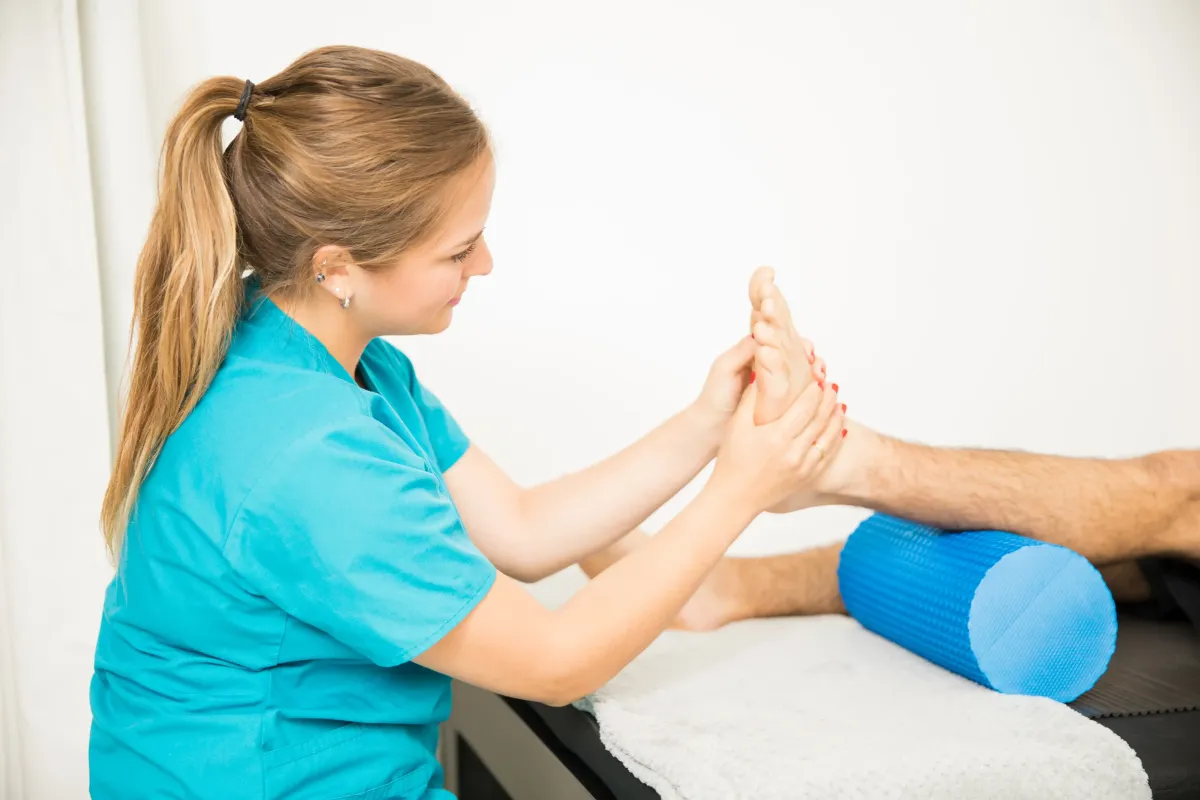
Plantar fasciitis is irritation of the band of tissue along the bottom of your foot, and it usually causes sharp heel pain with the first steps in the morning. Most people improve with stretching, strengthening, footwear changes and smarter loading. We treat it one-on-one at 385 5th Ave, a short walk from Grand Central.
What Is Plantar Fasciitis and Why Does It Cause Heel Pain?
Plantar fasciitis is one of the most common causes of heel pain. It happens when the plantar fascia—a thick band of tissue that runs along the bottom of your foot—becomes irritated or strained. This tissue supports your arch and helps absorb shock when you walk, run, or stand.
In a fast-paced city like NYC, your feet take a beating. Long commutes, standing for hours, and walking on hard pavement can all put repeated stress on the plantar fascia. Over time, small tears can develop, leading to inflammation and pain.
Most people feel discomfort near the heel or along the arch. The pain tends to build gradually rather than starting from a single injury, which is why many people ignore it until it starts affecting daily life.
What Are the Common Symptoms of Plantar Fasciitis?
The symptoms are usually pretty specific, which makes this condition easier to recognize.
The most noticeable sign is pain at the bottom of the foot, especially around the heel. It often feels sharp or stabbing when you take your first steps in the morning or after sitting for a while. As you start moving, the pain may ease a bit, but it can come back after long periods of standing or walking. You might also notice:
Increased pain after exercise (not usually during it)
Tightness in the arch or calf
Discomfort when stretching your toes upward
Pain when walking barefoot on hard surfaces
Tenderness when pressing on the heel
What Causes Plantar Fasciitis?
There’s rarely a single cause. It’s usually a combination of stress, lifestyle, and biomechanics. Some of the most common contributing factors include:
Long hours on your feet – Jobs that require standing or walking all day (healthcare workers, retail, construction) increase strain.
Improper footwear – Shoes without arch support or cushioning, including flip-flops or worn-out sneakers.
Tight calf muscles – Limited flexibility in the calf and Achilles tendon puts extra tension on the plantar fascia.
Sudden increase in activity – Starting a new workout routine or increasing running distance too quickly.
Flat feet or high arches – Both can change how weight is distributed across your foot.
Excess body weight – More load on the foot can accelerate tissue breakdown.
How Can You Start Managing Plantar Fasciitis at Home?
Early care can make a big difference. Many cases improve with simple, consistent changes. Here’s what actually helps:
Reduce stress on your foot
Try to limit long periods of standing or walking, especially on hard surfaces. If your routine doesn’t allow that, build in short rest breaks.
Use ice for pain and inflammation
Apply an ice pack or a frozen water bottle to the bottom of your foot for about 15–20 minutes, a few times a day. Rolling your foot over a frozen bottle also doubles as a gentle massage.
Wear supportive footwear
Choose shoes with good arch support and cushioned heels. Avoid walking barefoot at home, especially on tile or hardwood floors.
Add insoles or heel pads
Over-the-counter inserts can help reduce strain on the plantar fascia, especially if your shoes lack proper support.
Try gentle stretching
Regular stretching of the calf and foot is key. Focus on improving flexibility rather than forcing aggressive stretches.
Stay active—but modify it
Low-impact activities like swimming or cycling can help you stay active without putting extra pressure on your heel.
Use pain relief when needed
Over-the-counter options like paracetamol or ibuprofen (oral or topical) can help manage discomfort, but they shouldn’t be your only solution.
If symptoms don’t improve within a couple of weeks, or if the pain worsens, it’s time to move beyond self-care and consider a structured physical therapy plan.
Why Isn’t Your Plantar Fasciitis Getting Better?
Stretching alone may not be enough. Worn-out footwear, walking barefoot on hard surfaces, and continuing high-impact activity can all keep irritating the plantar fascia.
What Are the Best Physical Therapy Exercises for Plantar Fasciitis?
Exercise is one of the most effective ways to reduce pain and fix the root cause. The goal is to improve flexibility, strengthen the foot, and reduce stress on the plantar fascia. Here are the most useful, clinic-backed exercises you can start with:
1. Plantar Fascia Massage (Roll Technique)
Sit down and place your foot on a frozen water bottle, tennis ball, or golf ball. Slowly roll it back and forth from the ball of your foot to just before the heel. Do this for 3–5 minutes, once or twice daily. It helps reduce inflammation while loosening tight tissue.
2. Toe Towel Curls
Place a towel flat on the floor and use your toes to pull it toward you. Repeat 10–15 times for 2 sets. This strengthens the small muscles in your foot that support your arch.
3. Seated Plantar Fascia Stretch
Cross one leg over the other. Hold your toes and gently pull them back toward your shin until you feel a stretch along your arch. Hold for 20 seconds, repeat 3 times. This is especially helpful before your first steps in the morning.
4. Standing Calf Stretch (Wall Stretch)
Stand facing a wall with one leg behind you. Keep your back knee straight and heel on the ground while leaning forward. Hold for 20–45 seconds, repeat 3–4 times. Tight calves are a major contributor to plantar fasciitis.
5. Towel Stretch (Morning Stretch)
Before getting out of bed, loop a towel around your foot and gently pull it toward you while keeping your leg straight. Hold for 30–45 seconds. This reduces that sharp “first-step” pain.
6. Heel Raises (Strengthening Exercise)
Stand on the edge of a step with your heels hanging off. Slowly lower your heels, then rise back up. Do 10 reps for 2 sets. This strengthens your calf and improves shock absorption.
7. Calf Stretch on a Step
Place the ball of your foot on a step and slowly drop your heel downward. Hold for 30–45 seconds, repeat several times daily.
8. Ankle Strengthening with Resistance Band
Using a resistance band, gently rotate your foot inward against tension.
Perform 10 reps for 2 sets. This improves ankle stability and reduces strain on the foot.
What Treatments Do Physical Therapists Use?
If home care isn’t enough, a structured physical therapy program can speed up recovery and prevent the problem from coming back.
A typical plan may include:
Gait and movement assessment
Your walking pattern is analyzed to identify abnormal stress on your foot.
Manual therapy
Hands-on techniques help release tight fascia, improve mobility, and reduce pain.
Taping techniques
Temporary taping can support your arch and offload the plantar fascia during daily activities.
Stretching and strengthening programs
You’ll be guided through a structured plan that progresses as your pain improves.
Footwear and orthotic guidance
Recommendations for proper shoes, insoles, or heel pads based on your foot type.
Night splints (if needed)
These keep your foot in a stretched position overnight to reduce morning pain.
When Should You See a Physical Therapist or Specialist?
Not all heel pain needs medical treatment right away. But there are clear signs when you shouldn’t wait. You should seek professional care if:
Pain lasts more than 2–3 weeks despite home treatment
The pain is severe or affecting daily activities
Symptoms keep coming back
You feel tingling, numbness, or unusual sensations
You have diabetes and develop foot pain
If your symptoms aren’t improving, a personalized plan can help you recover faster and prevent future flare-ups. At Manhattan Physical Therapy, treatment focuses on long-term relief, not quick fixes.
Call (212)-213-3480 to book a one-on-one evaluation and start a recovery plan.
How long does it take to get better?
It depends on how long you've had it and how much your feet are on hard ground every day. Many people notice morning pain easing within a few weeks of consistent work. Long-standing heel pain can take several months. We'll give you a realistic estimate after your evaluation.
Acupuncture and dry needling
Some patients find acupuncture or dry needling helpful alongside exercise. We offer both here; see our pages on acupuncture and dry needling for plantar fasciitis.
Frequently Asked Questions
What is plantar fasciitis?
Irritation of the plantar fascia, the band of tissue running from your heel to your toes. It usually causes pain at the bottom of the heel, worst with the first steps of the day.
What causes plantar fasciitis and how is it treated?
Usually more load than the foot is used to: long hours standing or walking on hard pavement, running, unsupportive shoes, or tight calves. Treatment is mainly stretching, strengthening, footwear changes and adjusting activity for a while.
Why is plantar fasciitis worse in the morning?
The fascia and calf tighten overnight, so the first steps stretch them suddenly. Gentle calf and foot stretches before standing up often help.
How long does plantar fasciitis take to heal?
Many people improve within weeks once they start a consistent plan. Long-standing cases can take several months.
What is the fastest way to cure plantar fasciitis?
There's no single quick fix. What usually works fastest is doing the basics every day: stretching, strengthening, supportive shoes, and easing off the activity that flares it.
What stretches help plantar fasciitis?
Wall calf stretches (knee straight and bent), pulling your toes back to stretch the arch, and gently rolling the arch on a ball. We'll check your technique.
Can acupuncture help plantar fasciitis?
Some people find acupuncture or dry needling helps, usually alongside stretching and strengthening. We offer both and can talk through whether it fits your case.
What is a cortisone shot for plantar fasciitis?
A steroid injection near the painful area, given by a physician, to calm inflammation. Relief is often short-term. Ask your doctor about the risks; physical therapy can be done alongside it.
Are commuting and standing all day making it worse?
Often, yes. Long walks on hard pavement and hours of standing load the heel. Supportive shoes for the commute and short breaks to take weight off help.
Do I need a referral in New York?
Usually not. Under New York's direct-access rules, most patients can start physical therapy without a doctor's referral. Limits may apply depending on your insurance plan, so call 212-213-3480 and we'll help you check your coverage.
Where are you and when are you open?
385 5th Ave, Suite 503, at 36th Street, near Grand Central and Bryant Park. Monday to Friday, 8 am to 7 pm. Call 212-213-3480.
Are sessions one-on-one?
Yes. You're with your clinician for the whole session.
What Do They Say About Us?
Alexander Liu
"Everyone on the team at Manhattan Physical Therapy is super nice and caring. They were able to pretty quickly diagnose my knee and hip problems and immediately put me to work to reduce the pain.."
Henry Myerberg
"You're not just a patient when you come to the Manhattan Physical Therapy. You feel like family there. In particular, Erica with her colleagues John, Lidia and Joe not only fix and improve you physically, they make you feel welcomed and cared for.."
Hakyung Kim
"Everyone is so kind and helpful! my knee and hip pain have improved massively since starting Manhattan PT, highly recommend to anyone. special thanks to Bianca, Lidia, Joe, and John!"
Manhattan Physical Therapy
✆ Phone (appointments):
(212) 213-3480
Address: 385 5th Ave, Suite 503, New York, NY 10016


