

Patellar Tendonitis Treatment in NYC
Manhattan Physical Therapy
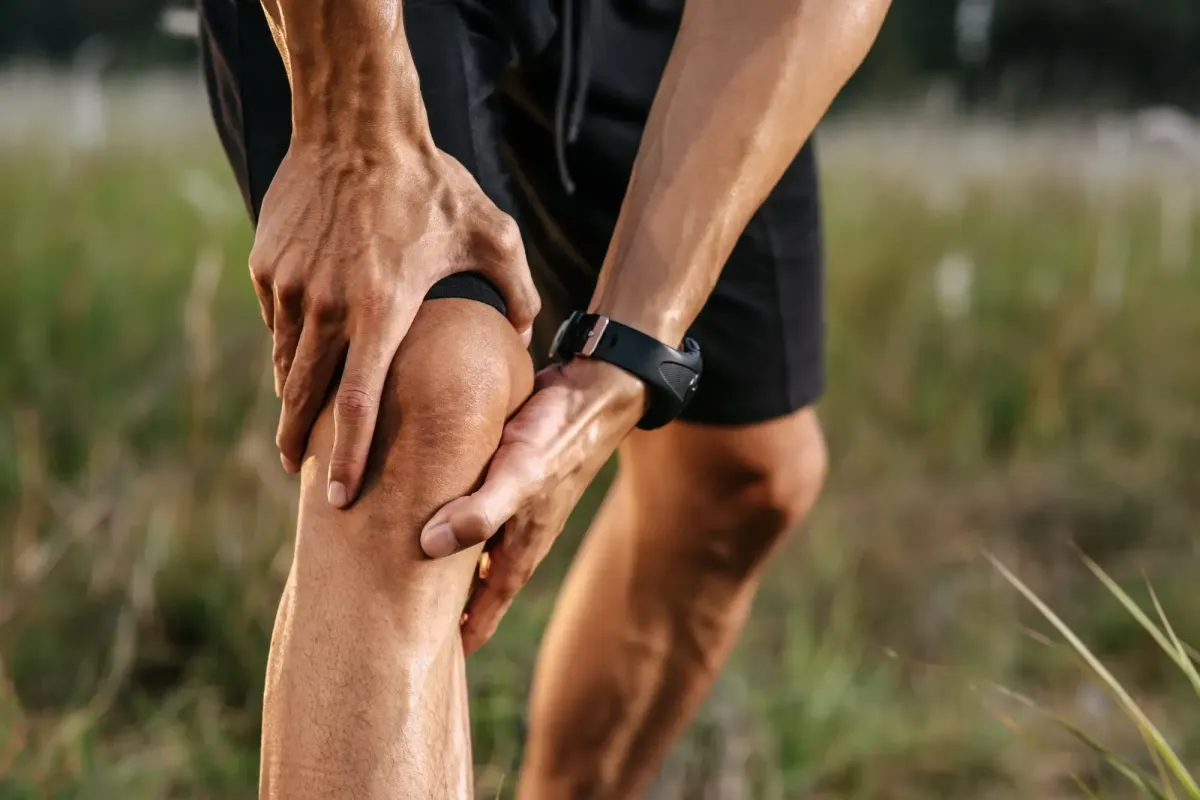
What Is Patellar Tendonitis?
Patellar tendonitis is a condition that creates pain at the front of your knee, right where the tendon connects your kneecap to your shin bone. This tendon works with your quadriceps to help you straighten your knee, walk, climb stairs, and land safely after a jump. When the tendon becomes irritated or overloaded, it can lead to persistent discomfort and stiffness—especially during activities that require knee extension.
Many New Yorkers experience this condition due to long days on their feet, demanding workouts, or the repetitive stress that comes with high-impact sports. Over time, tiny microtears in the tendon can build up when the knee doesn’t get enough recovery time. Patellar tendonitis is often called jumper’s knee, but you don’t need to be an athlete to develop it.
If knee pain continues beyond a few days of rest or starts interfering with your daily mobility, a proper evaluation is essential to prevent the condition from worsening.
Why Does Patellar Tendonitis Happen?
Patellar tendonitis typically develops from repeated stress placed on the tendon. This stress overloads the tissue, causing irritation and weakening over time. In New York City, where daily routines often involve long commutes, heavy walking, and active lifestyles, it’s common for the tendon to be pushed beyond its limits.
Two major patterns often lead to patellar tendonitis:
A sudden jump in activity: Starting a new fitness routine, playing pickup basketball on weekends, or increasing mileage too quickly during marathon training can strain the tendon faster than it can adapt.
Not enough recovery: Training too often, standing all day for work, or performing repetitive knee-bending tasks without proper rest can prevent the tendon from healing between sessions.
If the tendon never gets a chance to repair, irritation develops into ongoing pain, stiffness, and reduced knee function.
What Symptoms Should You Look For?
Patellar tendonitis creates very recognizable knee symptoms, especially during activities that load the front of the knee. Most patients describe:
A dull or aching pain at the base of the kneecap
Tenderness with even slight pressure
Stiffness that makes it harder to bend or straighten the knee
Pain when using stairs, squatting, running, jumping, or standing up after sitting
The pain often starts gradually and worsens the more you stress the tendon. Early treatment is key—continuing to push through the discomfort can worsen the injury and, in rare cases, lead to more serious tendon damage.
How Is Patellar Tendonitis Diagnosed?
A proper diagnosis is essential because knee pain can come from several different structures, not just the patellar tendon. During your evaluation, a physical therapist will look at how you move, test the strength around your knee and hips, and identify which activities aggravate your symptoms. Comparing both knees helps determine whether the pain is coming from the tendon itself or another area.
Imaging isn’t always required, but in some cases, an X-ray, ultrasound, or MRI may be used to rule out other conditions or to confirm the extent of tendon irritation. Most patients begin treatment immediately after their exam, since early intervention prevents the condition from becoming long-term.
How Physical Therapy Treats Patellar Tendonitis
Physical therapy restores knee function by improving tendon strength, reducing irritation, and correcting the movement patterns that caused the condition. Treatment begins with isometric exercises to reduce pain by up to 40% in the first two weeks. Targeted strengthening of the quadriceps, hips, and calves improves load tolerance, helping the tendon handle daily activities with less strain.
Manual therapy reduces stiffness and improves mobility, often restoring 10–15 degrees of knee motion within the first few sessions. As strength and control improve, patients progress to sport- or activity-specific training to return safely to running, stairs, or high-impact exercise.
What Treatments May Be Used Alongside Physical Therapy?
Most cases of patellar tendonitis recover fully with a good physical therapy plan. However, some patients benefit from additional supportive treatments, such as:
Taping or bracing to reduce stress on the tendon during activity
Cold therapy to reduce irritation after exercise
Strength progressions that safely increase tendon load
Shockwave therapy (when appropriate) for stubborn cases
Home exercise programs for daily strengthening between visits
How Long Does Recovery Take?
Recovery time depends on how long symptoms have been present and how irritated the tendon has become. Many patients with mild or early-stage symptoms notice improvement within a few weeks of structured therapy. Chronic cases may take longer because the tendon has adapted to months of stress.
The key is consistency. Tendon tissue heals best with gradual, steady loading—not rushing, not pushing through pain, and not taking long breaks between sessions.
Who Is Most at Risk?
While patellar tendonitis is common among athletes, many New Yorkers experience it for reasons unrelated to sports. You may be at higher risk if you:
Walk several miles a day
Frequently climb subway steps
Have a job that keeps you on your feet
Do high-intensity workouts like HIIT, boxing, CrossFit, or dance
Recently increased your training volume
Tend to skip warm-ups or recovery sessions
What Exercises Help Patellar Tendonitis Heal?
Strengthening and mobility exercises play a major role in recovering from patellar tendonitis. The right routine gradually loads the tendon so it becomes stronger, less irritated, and better able to handle daily movement. Below are exercises commonly used in therapy sessions and home routines—similar to the progressions found in many clinical rehab videos.
Always start slowly and stop if your pain increases sharply.
1. Straight Leg Raises
This exercise activates the quadriceps without bending the knee, making it ideal in the early stages of recovery.
How to do it:
Lie on your back with one knee bent and the other straight.
Tighten the thigh of the straight leg.
Lift it to the height of the opposite knee.
Lower slowly.
Stronger quadriceps reduce strain on the patellar tendon when you walk, climb stairs, or squat.
2. Heel Slides
Gentle motion restores mobility in the knee without adding pressure to the tendon.
How to do it:
Lie on your back with both legs straight.
Slide one heel toward your hips, bending your knee as far as comfortable.
Slowly slide it back out.
Improves knee movement and reduces stiffness that often accompanies tendon irritation.
3. Seated Knee Extensions
This exercise builds strength in the front of the thigh while maintaining good control.
How to do it:
Sit in a chair with your feet flat.
Extend one leg until your knee is straight.
Hold briefly, then lower with control.
Targets the quadriceps directly, allowing better tendon support during daily tasks.
4. Calf Raises
Strong calves help balance the workload in the lower leg and improve shock absorption.
How to do it:
Stand with support nearby.
Rise onto your toes, lifting your heels.
Lower slowly to the floor.
Improves ankle stability and reduces overload on the knee.
5. Hamstring Curls
Strengthening the back of the thigh helps create more balanced knee mechanics.
How to do it:
Stand and hold onto a stable surface.
Bend one knee, bringing your heel toward your hips.
Lower slowly.
Balances the forces around the knee so the patellar tendon isn’t doing all the work.
6. Mini Squats
A safe way to reintroduce controlled load through the knee.
How to do it:
Stand with feet hip-width apart.
Bend your knees slightly as if sitting back a few inches.
Keep weight through your heels.
Return to standing.
Builds strength in the quads and glutes while teaching proper knee alignment.
7. Balance and Stability Drills
These exercises train the knee to control movement—something that’s often lost when the tendon is irritated.
How to do it:
Stand on one leg for 20–30 seconds.
When that becomes easy, try standing on a pillow or soft surface.
Improves stability and helps prevent reinjury during sports, stair climbing, and walking on uneven ground in NYC.
How to Prevent Patellar Tendonitis
Simple adjustments can reduce strain on your knee and protect the tendon:
Strengthen your quads, hips, and calves regularly
Increase activity or training volume slowly
Warm up before workouts
Stretch your quads, hip flexors, and calves
Avoid repeatedly pushing through knee pain
Give your body time to recover after high-impact workouts
If knee pain is limiting your daily routine, workouts, or ability to move comfortably around the city, early treatment can make all the difference. Call us at (212)-213-3480 to schedule your appointment today.
What others are saying
Alexander Liu
"Everyone on the team at Manhattan Physical Therapy is super nice and caring. They were able to pretty quickly diagnose my knee and hip problems and immediately put me to work to reduce the pain.."
Henry Myerberg
"You're not just a patient when you come to the Manhattan Physical Therapy. You feel like family there. In particular, Erica with her colleagues John, Lidia and Joe not only fix and improve you physically, they make you feel welcomed and cared for.."
Hakyung Kim
"Everyone is so kind and helpful! my knee and hip pain have improved massively since starting Manhattan PT, highly recommend to anyone. special thanks to Bianca, Lidia, Joe, and John!"
Manhattan Physical Therapy
✆ Phone (appointments):
(212) 213-3480
Address: 385 5th Ave, Suite 503, New York, NY 10016


