

Patellar Fracture Treatment in NYC
Manhattan Physical Therapy
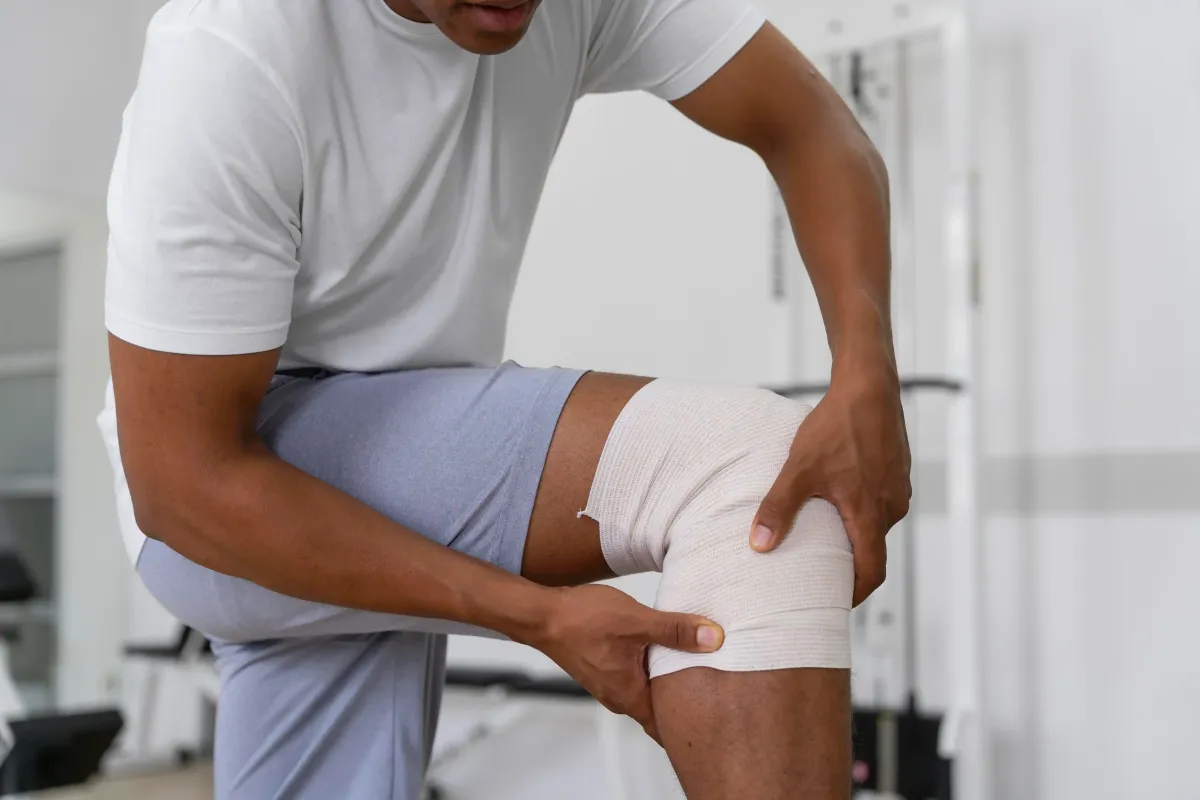
Neck painA fractured kneecap can make even simple movements like standing, walking, or climbing stairs extremely difficult. Prompt diagnosis and appropriate treatment are essential to restore knee function, reduce complications, and help patients return to their normal activities. Whether your injury resulted from a fall, sports accident, or motor vehicle collision, understanding your treatment options can help you make informed decisions about recovery.A fractured kneecap can make even simple movements like standing, walking, or climbing stairs extremely difficult. Prompt diagnosis and appropriate treatment are essential to restore knee function, reduce complications, and help patients return to their normal activities. Whether your injury resulted from a fall, sports accident, or motor vehicle collision, understanding your treatment options can help you make informed decisions about recovery.
A fractured kneecap can make even simple movements like standing, walking, or climbing stairs extremely difficult. Prompt diagnosis and appropriate treatment are essential to restore knee function, reduce complications, and help patients return to their normal activities. Whether your injury resulted from a fall, sports accident, or motor vehicle collision, understanding your treatment options can help you make informed decisions about recovery.
What Is a Patellar Fracture?
A patellar fracture is a break in the patella, commonly known as the kneecap. The patella is a small triangular bone located at the front of the knee joint. It serves as a protective shield for the knee while also improving the efficiency of the quadriceps muscles when straightening the leg.
Although patellar fractures account for only about 1% of all skeletal fractures, they can significantly affect mobility and quality of life. Because the kneecap plays a critical role in the knee's extensor mechanism, a fracture may make it difficult or impossible to straighten the leg, walk normally, or bear weight comfortably.
The severity of a patellar fracture can vary widely. Some fractures involve a small crack in the bone, while others cause the kneecap to break into multiple fragments. The extent of the injury often determines whether conservative treatment or surgery is required.
What Causes a Patellar Fracture?
Most patellar fractures occur when a strong force is applied directly to the front of the knee. Common causes include:
Slipping and falling directly onto the knee
Motor vehicle accidents, particularly dashboard injuries
Sports-related trauma
Bicycle and pedestrian accidents
Workplace injuries
High-impact recreational activities
Less commonly, a patellar fracture can occur without a direct blow. A sudden and powerful contraction of the quadriceps muscle may place excessive stress on the kneecap, causing it to fracture. This mechanism is sometimes seen during jumping, landing, or abrupt changes in direction during athletic activities.
What Are the Different Types of Patellar Fractures?
Patellar fractures are classified based on the fracture pattern and the degree of displacement. Identifying the fracture type is essential because it directly influences treatment recommendations.
Stable (Nondisplaced) Patellar Fracture
In a stable fracture, the broken bone fragments remain properly aligned. The pieces may be separated by only a few millimeters or remain connected. Since the extensor mechanism often remains intact, many stable fractures can heal successfully without surgery.
Displaced Patellar Fracture
A displaced fracture occurs when the fractured bone fragments shift out of their normal position. Because the kneecap can no longer function effectively, surgical repair is frequently necessary to restore knee mechanics and ensure proper healing.
Transverse Patellar Fracture
A transverse fracture runs horizontally across the kneecap and is one of the most common fracture patterns. This type often results from sudden forceful contraction of the quadriceps muscle or direct trauma. Depending on the degree of separation, surgery may be required.
Comminuted Patellar Fracture
In a comminuted fracture, the kneecap breaks into three or more fragments. These injuries typically result from high-energy trauma and can be more complex to treat because some fragments may be too small for fixation.
Open Patellar Fracture
An open fracture occurs when the broken bone penetrates the skin or when an external object creates a wound that reaches the fracture site. This is considered a medical emergency because of the increased risk of infection and damage to surrounding tissues.
Vertical and Osteochondral Fractures
Less common fracture patterns include vertical fractures that run lengthwise through the patella and osteochondral fractures that involve both bone and cartilage. These injuries require careful evaluation because cartilage damage may increase the risk of future knee arthritis.
What Are the Symptoms of a Patellar Fracture?
Symptoms usually develop immediately after the injury and can range from mild discomfort to severe functional limitations.
Common signs and symptoms include:
Sharp pain at the front of the knee
Rapid swelling around the kneecap
Bruising and discoloration
Tenderness when touching the knee
Difficulty bending or straightening the leg
Inability to perform a straight-leg raise
Difficulty walking or bearing weight
A visible deformity or gap in the kneecap
Grinding sensations during movement
One of the most important clinical signs is the inability to actively straighten the knee. This often indicates disruption of the knee's extensor mechanism and may suggest a more severe injury requiring surgical intervention.
Some patients can still walk short distances despite a fracture, particularly when the injury is nondisplaced. However, continuing to walk on an undiagnosed patellar fracture may worsen the injury and delay recovery.
How Is a Patellar Fracture Diagnosed?
Accurate diagnosis is essential because treatment decisions depend on the fracture pattern, degree of displacement, and the integrity of the knee's extensor mechanism.
A healthcare provider will begin by reviewing your symptoms, the circumstances of the injury, and your medical history. During the physical examination, they may assess:
Swelling and bruising around the knee
Areas of tenderness
Visible deformity of the kneecap
Ability to perform a straight-leg raise
Ability to bend and straighten the knee
Signs of open wounds or associated injuries
Diagnostic imaging is typically required to confirm the diagnosis.
X-Rays
Standard knee X-rays are usually the first imaging study performed. They help identify:
Fracture location
Degree of displacement
Number of fracture fragments
Joint involvement
CT Scan
A CT scan may be recommended when the fracture pattern is complex or when additional detail is needed for surgical planning. CT imaging can provide a more precise assessment of fragment size and articular surface involvement.
MRI
Although not routinely required, MRI may be used when there is concern for associated injuries involving cartilage, ligaments, tendons, or other soft tissues around the knee.
Early diagnosis allows treatment to begin promptly and may help reduce the risk of complications such as stiffness, weakness, and post-traumatic arthritis.
Patellar Fracture Treatment Options
Treatment depends on several factors, including fracture type, fragment displacement, cartilage involvement, activity level, and overall health status. The primary goals of treatment are to:
Restore knee function
Preserve the extensor mechanism
Promote proper bone healing
Minimize long-term complications
Return patients to daily activities as safely as possible
Non-Surgical Treatment
Not every patellar fracture requires surgery. Stable, nondisplaced fractures with an intact extensor mechanism can often be treated conservatively. Conservative treatment may include:
Knee immobilization in full extension
Hinged knee brace or cast
Protected weight-bearing
Crutches when necessary
Regular follow-up imaging to monitor healing
Immobilization generally lasts four to six weeks, although the timeline varies depending on healing progress.
Surgical Treatment
Surgery is often recommended when:
Bone fragments are displaced
The extensor mechanism is disrupted
There is significant joint surface incongruity
An open fracture is present
Conservative treatment is unlikely to restore normal knee function
Physical Therapy After a Patellar Fracture
Physical therapy plays a critical role in recovering from a patellar fracture, regardless of whether surgery was required.
The rehabilitation process focuses on restoring:
Knee mobility
Quadriceps strength
Balance and coordination
Walking mechanics
Functional movement patterns
Early Phase Rehabilitation (Weeks 0-6)
The initial phase focuses on protecting the healing fracture while minimizing secondary complications.
Treatment may include:
Swelling management
Pain reduction strategies
Gentle patellar mobilization when appropriate
Isometric quadriceps activation
Straight-leg raises
Hip strengthening exercises
Ankle mobility exercises
Gait training with assistive devices
Intermediate Phase Rehabilitation (Weeks 6-12)
Once healing progresses and range-of-motion restrictions are reduced, therapy becomes more active.
Common interventions include:
Progressive knee bending exercises
Stationary cycling
Closed-chain strengthening
Step-up exercises
Mini squats
Balance training
Proprioceptive exercises
Advanced Rehabilitation Phase
As strength and mobility improve, rehabilitation shifts toward restoring higher-level function.
Treatment may include:
Functional strengthening
Lunges and advanced squat variations
Dynamic balance training
Stair negotiation training
Sport-specific exercises
Return-to-work conditioning
Potential Complications
While many patients recover successfully, complications can occur.
These may include:
Knee stiffness
Persistent pain
Quadriceps weakness
Delayed union
Nonunion
Malunion
Post-traumatic osteoarthritis
Hardware irritation after surgery
Patellar Fracture Treatment in NYC
Recovering from a patellar fracture requires the right combination of medical care, rehabilitation, and guidance throughout every stage of healing. At Manhattan Physical Therapy, our team works closely with patients to restore mobility, rebuild strength, and help them return to the activities they enjoy.
If you are experiencing knee pain after a fall, sports injury, or accident, call (212)-213-3480 to schedule an evaluation and learn about your treatment options.
References
1. Physiopedia contributors. Patellar Fractures. Physiopedia. Available at: https://www.physio-pedia.com/Patellar_Fractures. Accessed June 18, 2026.
2. Cleveland Clinic. Patella Fracture: Types, Symptoms, Treatment & Recovery. Available at: https://my.clevelandclinic.org/health/diseases/22081-patella-fracture. Accessed June 18, 2026.
What Do They Say About Us?
Alexander Liu
"Everyone on the team at Manhattan Physical Therapy is super nice and caring. They were able to pretty quickly diagnose my knee and hip problems and immediately put me to work to reduce the pain.."
Henry Myerberg
"You're not just a patient when you come to the Manhattan Physical Therapy. You feel like family there. In particular, Erica with her colleagues John, Lidia and Joe not only fix and improve you physically, they make you feel welcomed and cared for.."
Hakyung Kim
"Everyone is so kind and helpful! my knee and hip pain have improved massively since starting Manhattan PT, highly recommend to anyone. special thanks to Bianca, Lidia, Joe, and John!"
Manhattan Physical Therapy
✆ Phone (appointments):
(212) 213-3480
Address: 385 5th Ave, Suite 503, New York, NY 10016


