

Dry Needling for Trapezius Pain in NYC
Manhattan Physical Therapy
Why Does Trapezius Pain Happen So Often in NYC?
Neck and upper shoulder pain is one of the most common complaints among people working in New York City. Long hours at a desk, constant phone use, and daily commuting all add up. Over time, this creates excessive strain on the upper trapezius muscle, which runs from the base of your skull to your shoulder.
A major reason behind this discomfort is the development of myofascial trigger points—small, tight bands within the muscle that people often describe as “knots.” These trigger points can:
Cause deep, aching pain in the shoulder
Send pain up into the neck or head
Limit how far you can turn or tilt your neck
Contribute to tension headaches
Clinical research supports this. Studies on office workers have shown that trigger points in the trapezius are strongly linked to chronic neck pain, reduced mobility, and decreased muscle strength.
What Exactly are Muscle Knots in the Trapezius?
Muscle knots are not just tight muscles. They are hyperirritable spots within a taut band of muscle fibers. When you press on them, they often feel tender and may even refer pain to other areas. In the trapezius, these trigger points commonly develop due to:
Forward head posture from laptop and phone use
Sitting for long periods without movement
Emotional stress leading to muscle tension
Repetitive movements or overuse
Previous neck or shoulder injuries
What makes them tricky is their ability to refer pain. A knot in your shoulder might actually be the reason behind headaches or stiffness in your neck. That’s why many people try massage or stretching and only get temporary relief.
How Does Dry Needling Work for Trapezius Pain?
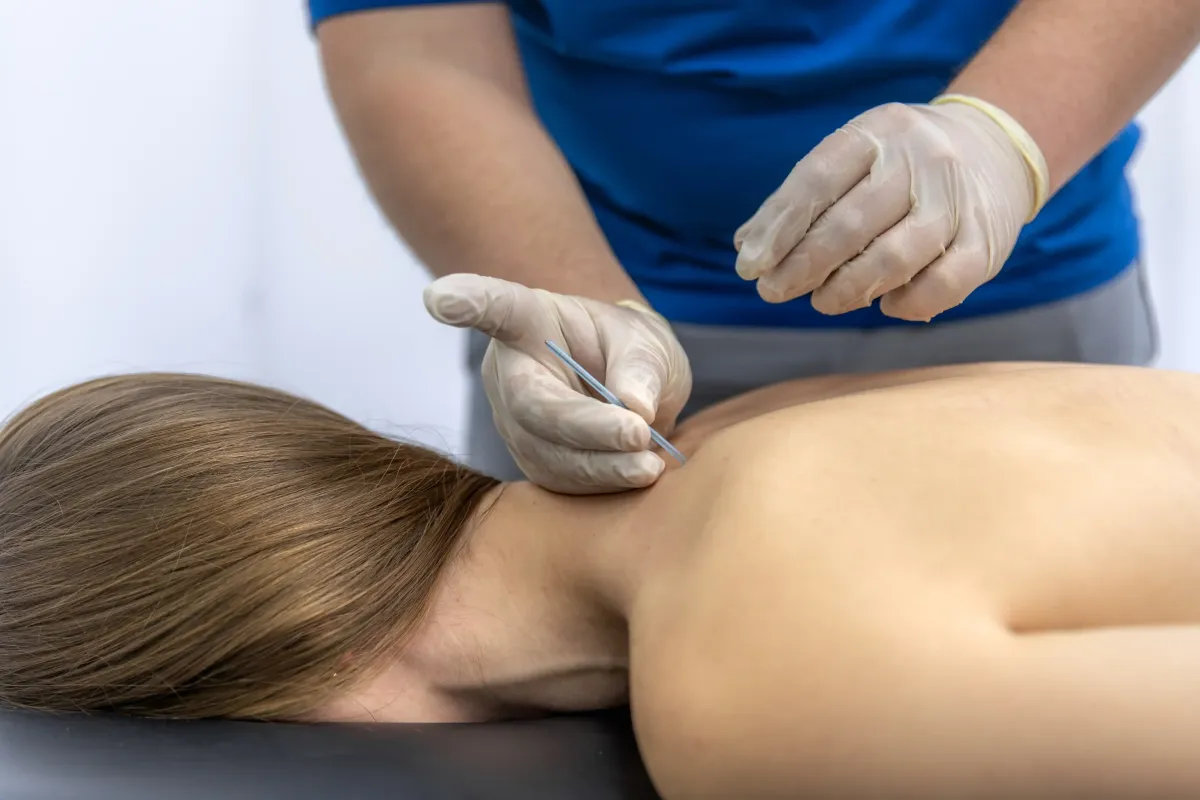
Dry needling is a targeted treatment designed to directly address these trigger points. It involves inserting a very thin, sterile needle into the affected area of the muscle.
The goal is to trigger what’s called a local twitch response. This is a brief contraction of the muscle that helps reset it. Once this happens, several positive changes follow:
Muscle tension decreases
Blood flow improves, bringing oxygen and nutrients to the area
Pain signals are reduced
Muscle activity normalizes
Research backs this up. Clinical trials comparing dry needling plus stretching versus stretching alone found significantly better outcomes in pain reduction, pressure sensitivity, range of motion, and strength in the dry needling group. These improvements were still noticeable even after a short follow-up period.
When Should You Consider Dry Needling?
Dry needling is usually recommended when trapezius pain becomes persistent and doesn’t respond well to basic treatments like rest, stretching, or medication. You might be a good candidate if you have:
Ongoing neck or shoulder tightness
Pain at the top or back of the shoulder
Frequent tension headaches
Reduced neck mobility
Pain that spreads to the head, jaw, or upper back
Difficulty maintaining proper posture throughout the day
At Manhattan Physical Therapy, the process starts with a detailed assessment. This includes identifying trigger points, checking your range of motion, and understanding how your daily routine contributes to the problem.
From there, dry needling is often combined with corrective exercises, posture training, and manual therapy. This combination tends to produce better and longer-lasting results compared to using one treatment alone.
What Happens During a Dry Needling Session?
Your visit typically starts with a focused evaluation. The provider will assess your posture, neck mobility, and identify active trigger points in the trapezius. During the treatment:
You’ll be positioned comfortably, usually lying face down or seated
The clinician will palpate the muscle to locate tight bands
A thin, sterile needle is inserted into the trigger point
You may feel a quick twitch or a dull ache. That response is expected and often a sign the right spot was reached
The entire process is quick. Each needle may stay in place for a few seconds to a couple of minutes, depending on the technique used.
After the session, it’s normal to feel mild soreness, similar to what you’d feel after a workout. This usually settles within 24 to 48 hours. Many patients notice improved movement and reduced tension within that same timeframe.
What Kind of Results Can You Expect?
Most people seek dry needling because they’ve tried other options without lasting relief. When done correctly and combined with a proper rehab plan, the results can be noticeable. Based on clinical evidence and patient outcomes, you can expect:
Reduced pain levels shortly after treatment
Better neck and shoulder mobility
Less sensitivity in trigger points
Improved muscle strength and function
Relief from associated headaches and referred pain
Some studies have shown that adding dry needling to standard physical therapy improves disability scores, range of motion, and even mood-related symptoms in people with chronic neck pain.
Is Dry Needling Safe?
When performed by a trained professional, dry needling is considered safe. Clinicians use:
Sterile, single-use needles
Proper anatomical knowledge to avoid sensitive structures
Clean techniques to minimize risk
The most common side effects are mild and temporary:
Soreness at the treatment site
Minor bruising
Fatigue after the session
How Dry Needling Fits into a Full Recovery Plan
Dry needling works best when it’s not used in isolation. The real goal is not just to relieve pain, but to prevent it from coming back. That’s why treatment plans often include:
Targeted exercises to strengthen weak muscles
Posture correction to reduce strain on the trapezius
Manual therapy to improve tissue mobility
Movement retraining for daily activities
For example, if your pain is coming from prolonged desk work, simply releasing the trigger point won’t solve the issue long term. You also need to fix the underlying posture and movement habits.
Why NYC Patients are Turning to Dry Needling
Living and working in NYC puts constant demand on your body. Long commutes, desk jobs, and high stress levels create the perfect environment for chronic trapezius pain. Many patients come in after trying:
Massage therapy
Stretching routines
Pain medication
These may help temporarily, but they often don’t address the root cause. Dry needling offers a more direct approach by targeting the trigger point itself. For busy professionals, it’s also appealing because:
Sessions are quick
Recovery time is minimal
Results can be felt relatively fast
Dry needling is a practical, research-backed option that targets the source of the problem, not just the symptoms. When combined with the right rehab plan, it can help restore normal movement and reduce pain in a meaningful way.
If you’re dealing with ongoing neck or shoulder tension in NYC, it may be time to look beyond temporary fixes and consider a more targeted approach. Call Manhattan Physical Therapy at (212)-213-3480 to schedule your evaluation today.
What Do They Say About Us?
Alexander Liu
"Everyone on the team at Manhattan Physical Therapy is super nice and caring. They were able to pretty quickly diagnose my knee and hip problems and immediately put me to work to reduce the pain.."
Henry Myerberg
"You're not just a patient when you come to the Manhattan Physical Therapy. You feel like family there. In particular, Erica with her colleagues John, Lidia and Joe not only fix and improve you physically, they make you feel welcomed and cared for.."
Hakyung Kim
"Everyone is so kind and helpful! my knee and hip pain have improved massively since starting Manhattan PT, highly recommend to anyone. special thanks to Bianca, Lidia, Joe, and John!"
Manhattan Physical Therapy
✆ Phone (appointments):
(212) 213-3480
Address: 385 5th Ave, Suite 503, New York, NY 10016


