

Dry Needling for Shoulder Pain in NYC
Manhattan Physical Therapy
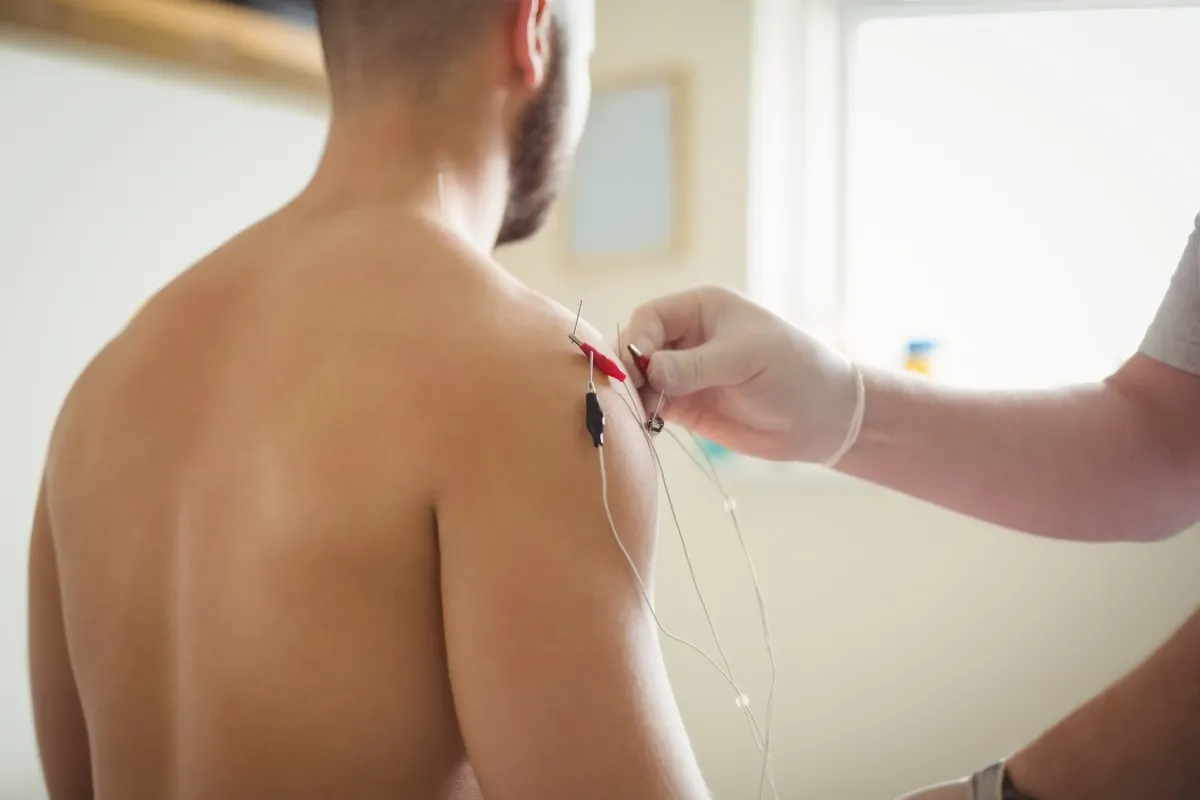
Why does shoulder pain linger longer than expected?
Shoulder pain often doesn’t come from a single issue. It usually builds over time due to repetitive strain, poor posture, or muscle imbalances. In a fast-paced city like New York, long desk hours, commuting, and limited recovery time can make things worse.
Many patients dealing with ongoing shoulder discomfort are actually experiencing myofascial pain syndrome (MPS). This condition involves tight, sensitive knots in the muscles, known as trigger points, that can refer pain to other areas. You might feel a deep ache, stiffness, or even weakness when lifting your arm. Other common causes include:
Overuse from sports or gym activity
Rotator cuff irritation
Shoulder impingement
Previous injuries that never fully healed
What exactly is dry needling and how does it work?
Dry needling is a technique used by trained physical therapists to treat muscle pain and dysfunction. It involves inserting very thin, sterile needles directly into trigger points within tight muscles.
Despite the name, nothing is injected. The needle itself creates a response in the muscle. When the needle reaches a trigger point, it often produces a small twitch. This reaction helps:
Release muscle tightness
Improve blood flow to the area
Reduce inflammation
Reset how the nerve and muscle communicate
Unlike acupuncture, which is based on traditional Chinese medicine, dry needling is rooted in modern anatomy and focuses specifically on musculoskeletal problems.
How can dry needling help relieve shoulder pain?
Dry needling is particularly effective when shoulder pain is linked to muscle dysfunction rather than structural damage. The treatment targets key muscles involved in shoulder movement, such as:
Deltoid
Infraspinatus
Subscapularis
Rotator cuff group
By releasing tight trigger points in these muscles, dry needling can:
Reduce pain intensity within a few sessions
Improve range of motion
Decrease muscle stiffness
Restore normal movement patterns
Research also shows that patients may begin to feel noticeable pain relief within a couple of days after treatment, with continued improvement over the following week.
Is dry needling the right option for every type of shoulder pain?
Not always. That’s an important distinction.
Dry needling works best when pain is coming from muscles, especially in cases like:
Myofascial pain syndrome
Muscle tightness or imbalance
Overuse injuries
Certain cases of shoulder impingement
However, if the pain is caused by structural issues such as:
Severe arthritis
Labral tears
Advanced joint damage
Acute fractures or dislocations
then other treatments may be more appropriate, either alongside or instead of dry needling.
This is why a proper evaluation matters. At Manhattan Physical Therapy, the focus is on identifying the root cause first, then building a treatment plan that fits your condition rather than applying a one-size-fits-all approach.
Is dry needling safe for shoulder pain?
When performed by a trained professional, dry needling is considered a safe and well-tolerated treatment. At Manhattan Physical Therapy, sterile, single-use needles are used, and the technique is applied with a clear understanding of anatomy to minimize risk. Most people handle the treatment without any issues. Some mild side effects can occur, including:
Temporary soreness in the treated area
Light bruising
Mild fatigue or dizziness shortly after the session
These effects are usually short-lived and resolve within a day or two. Serious complications are extremely rare.
What does it feel like after a dry needling session?
It’s normal to feel a bit different after your session, especially if it’s your first time.
Some patients notice immediate relief, while others experience a dull soreness that can start a few hours later or even the next day. This soreness is similar to what you might feel after a workout and usually fades within 24–48 hours. You may also notice:
Improved shoulder mobility
Less tension when moving your arm
A gradual reduction in pain over the next few days
In many cases, the most noticeable improvement shows up within 2–7 days after treatment as the muscle begins to relax and function more normally.
What should you do (and avoid) after treatment?
What you do after your session can influence how quickly you recover and how effective the treatment is.
Helpful steps to follow:
Stay hydrated for the next 24 hours
Keep your body moving with light activity
Do any prescribed stretches or exercises
Use ice if you notice soreness or minor swelling
Things to avoid right away:
Intense shoulder workouts or heavy lifting
Trying new or strenuous physical activities
Overusing the treated muscles
What types of shoulder conditions can benefit from dry needling?
Dry needling is not limited to one specific diagnosis. It can be helpful across a range of muscle-related shoulder issues. Common conditions that respond well include:
Myofascial pain syndrome
Shoulder impingement linked to muscle tightness
Rotator cuff-related pain
Postural strain from desk work
Sports-related overuse injuries
For example, in shoulder impingement, tight muscles can reduce space in the joint and create a pinching sensation during movement. By releasing those muscles, dry needling helps reduce pressure and improve motion.
Why do NYC patients choose Manhattan Physical Therapy for dry needling?
At Manhattan Physical Therapy, dry needling is part of a broader, hands-on approach to care. Each treatment plan is built around:
A detailed evaluation to identify the true source of pain
One-on-one sessions focused on your specific needs
A combination of manual therapy, movement training, and targeted techniques
Clear guidance to help prevent the pain from returning
When should you seek treatment for shoulder pain?
It’s easy to ignore shoulder pain at first, especially if it comes and goes. But waiting too long can make things harder to treat. You should consider getting evaluated if:
Pain lasts more than a few days
You notice limited range of motion
The shoulder feels weak or unstable
Daily activities like reaching or lifting become difficult
Pain is interfering with sleep
If shoulder pain is limiting your movement or affecting your daily life, it’s worth getting the right care sooner rather than later.
Dry needling can be a powerful option when muscle tightness and trigger points are the root cause. At Manhattan Physical Therapy, the goal is to treat the source of your pain, not just the symptoms. Call (212)-213-3480 to schedule your evaluation today and start moving comfortably again.
What Do They Say About Us?
Alexander Liu
"Everyone on the team at Manhattan Physical Therapy is super nice and caring. They were able to pretty quickly diagnose my knee and hip problems and immediately put me to work to reduce the pain.."
Henry Myerberg
"You're not just a patient when you come to the Manhattan Physical Therapy. You feel like family there. In particular, Erica with her colleagues John, Lidia and Joe not only fix and improve you physically, they make you feel welcomed and cared for.."
Hakyung Kim
"Everyone is so kind and helpful! my knee and hip pain have improved massively since starting Manhattan PT, highly recommend to anyone. special thanks to Bianca, Lidia, Joe, and John!"
Manhattan Physical Therapy
✆ Phone (appointments):
(212) 213-3480
Address: 385 5th Ave, Suite 503, New York, NY 10016


