

Dry Needling for Neck Pain in NYC
Manhattan Physical Therapy
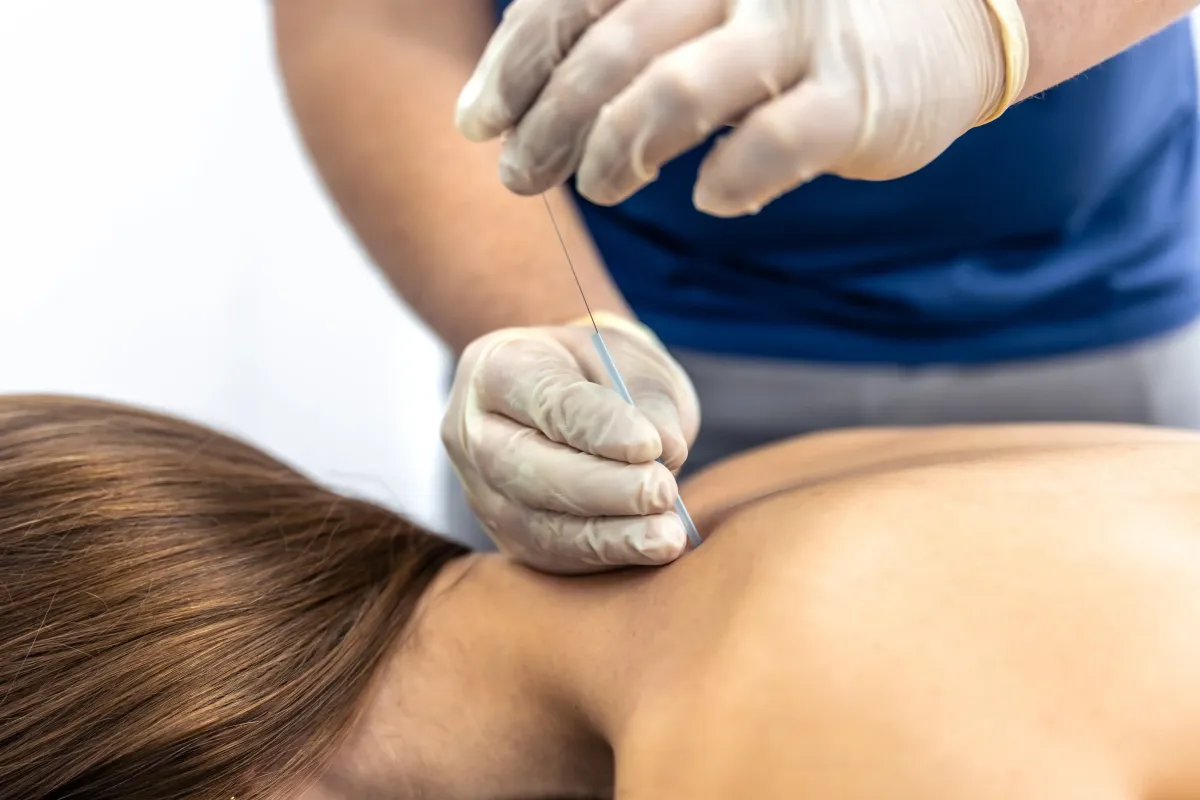
What is Dry Needling and How does it Work?
Dry needling is a hands-on treatment used by trained clinicians to relieve muscle pain and improve movement. It involves inserting very thin, sterile needles into tight areas of muscle known as trigger points. These trigger points are sensitive knots that can cause pain locally and even send discomfort to other parts of the body.
When the needle reaches a trigger point, it often creates a brief muscle twitch. This response helps release tension, improve blood flow, and calm irritated nerves. Unlike injections, no medication is used, which is why it’s called “dry” needling.
From a clinical perspective, dry needling is based on modern anatomy and neurophysiology. The goal is simple: reduce muscle tightness, restore normal movement, and decrease pain. Many patients notice improved mobility and less stiffness shortly after treatment, especially when it’s part of a broader physical therapy plan.
What Causes Neck Pain in the First Place?
Neck pain is rarely caused by a single issue. In a busy city like NYC, daily habits often play a major role. Long hours at a desk, constant phone use, and stress can all build up over time. Some of the most common causes include:
Muscle strain and overuse
Spending hours looking down at a screen or sitting with poor posture can strain the neck muscles. Over time, this leads to tightness, fatigue, and pain.
Postural stress
Forward head posture is very common, especially among office workers. This places extra pressure on the cervical spine and surrounding muscles.
Herniated or bulging discs
Discs in the neck can press on nearby nerves, causing pain that may travel into the shoulders or arms.
Age-related changes
Conditions like osteoarthritis can wear down joints in the neck, leading to stiffness and chronic discomfort.
Injuries like whiplash
Sudden movements from car accidents or sports injuries can strain soft tissues and cause lasting pain.
Stress and tension
Emotional stress often shows up physically. Tight shoulders and neck muscles are a common response.
Understanding the root cause is key. Not all neck pain responds the same way to treatment, which is why a proper evaluation matters before starting dry needling or any therapy.
Does Dry Needling Actually Help with Neck Pain?
Research suggests that dry needling can be effective, especially for neck pain related to muscle and trigger point issues. Several clinical studies have shown:
Short-term pain relief and improved range of motion
Reduced muscle tightness and sensitivity
Better function in daily activities
Continued improvement when combined with exercise therapy
Some studies have also followed patients for several months and found that benefits can last beyond the initial treatment phase. While it may not fix every type of neck pain, it tends to work well for myofascial pain, which is one of the most common causes.
At our clinic, Manhattan Physical Therapy, dry needling is rarely used alone. It’s typically combined with corrective exercises, posture training, and manual therapy. This combination tends to produce better and longer-lasting results than any single approach.
Is Dry Needling Painful or Safe?
Most people expect it to hurt more than it actually does. The needles used are very thin, much smaller than those used for injections.
You might feel:
A quick pinprick when the needle enters
A twitch or cramp-like sensation in the muscle
Mild soreness afterward, similar to post-workout discomfort
These reactions are normal and usually short-lived.
In terms of safety, dry needling is considered low risk when performed by a properly trained professional. Side effects are generally mild and may include slight bruising, temporary soreness, or minor bleeding at the insertion site.
How Long do the Results of Dry Needling Last?
The duration of relief varies from person to person. Some patients feel noticeable improvement after just one session, while others need a series of treatments to see lasting results. Current evidence and clinical experience suggest:
Short-term relief can happen within days, with reduced pain and improved movement
Mid-term benefits often last several weeks to a few months
Some patients continue to improve over 3 to 6 months, especially when treatment is combined with exercise and posture correction
Your outcome depends on a few key factors, including the cause of your neck pain, how long you’ve had it, your daily habits, and how consistent you are with your treatment plan.
Dry needling works best as part of a bigger strategy. If the underlying issues like poor posture or weak muscles aren’t addressed, the pain can return over time.
What Happens During a Dry Needling Session?
If you’ve never tried dry needling before, knowing what to expect can make the process much easier.
A typical session starts with an evaluation. Your provider will assess your posture, range of motion, muscle tightness, and pain patterns. This helps identify the exact trigger points contributing to your symptoms. During the treatment:
Thin needles are inserted into targeted muscle areas
You may feel a brief twitch or deep ache as the muscle responds
The needles are usually left in place for a short period, depending on your condition
The entire process is quick and focused. Many sessions last between 15 to 30 minutes when combined with other therapy techniques.
Afterward, it’s common to feel some soreness, but this usually fades within a day or two. Many patients report feeling looser and more mobile shortly after.
Why Combine Dry Needling with Physical Therapy?
Dry needling can reduce pain, but it doesn’t correct the habits or weaknesses that caused the problem in the first place. That’s where physical therapy becomes essential. When combined, these approaches work together to:
Release tight muscles through dry needling
Restore strength and stability with targeted exercises
Improve posture and movement patterns
Prevent the pain from coming back
A well-rounded treatment plan may include:
Stretching and mobility work
Strengthening exercises for neck and upper back muscles
Postural training for desk and daily activities
Manual therapy to improve joint movement
At Manhattan Physical Therapy, this combined approach is often used to address both the symptoms and the root cause. It’s a more complete way to treat neck pain, especially for people dealing with long hours at a desk or repetitive strain.
When Should You See a Professional for Neck Pain?
Not all neck pain requires treatment, but certain signs shouldn’t be ignored.
You should consider seeing a healthcare provider if:
Pain lasts more than a week without improvement
Over-the-counter medications don’t help
Pain spreads into your arms or hands
You feel numbness, tingling, or weakness
Neck stiffness limits your ability to move normally
The pain started after an injury or accident
These symptoms can point to more than just muscle tension. Getting evaluated early can prevent the issue from becoming more serious.
Is Dry Needling the Same as Acupuncture?
They may look similar, but they’re based on different ideas.
Dry needling focuses on muscle trigger points and is grounded in modern medical science
Acupuncture comes from traditional Chinese medicine and targets energy pathways in the body
Both use thin needles, but the purpose and technique are different. Some patients benefit from one, some from the other, and some from a combination depending on their condition.
Who is a Good Candidate for Dry Needling?
Dry needling is often a good option for people dealing with:
Chronic neck pain related to muscle tightness
Postural strain from desk work or phone use
Tension headaches linked to neck muscles
Pain that hasn’t improved with stretching alone
It may not be suitable for everyone. People with certain medical conditions, needle sensitivity, or specific contraindications may need alternative treatments.
If your symptoms aren’t improving, getting the right diagnosis and treatment plan can make a real difference.Top of FormBottom of Form Ready to get relief from persistent neck pain? Call (212)-213-3480 to book your evaluation and find out if dry needling is right for you.
What Do They Say About Us?
Alexander Liu
"Everyone on the team at Manhattan Physical Therapy is super nice and caring. They were able to pretty quickly diagnose my knee and hip problems and immediately put me to work to reduce the pain.."
Henry Myerberg
"You're not just a patient when you come to the Manhattan Physical Therapy. You feel like family there. In particular, Erica with her colleagues John, Lidia and Joe not only fix and improve you physically, they make you feel welcomed and cared for.."
Hakyung Kim
"Everyone is so kind and helpful! my knee and hip pain have improved massively since starting Manhattan PT, highly recommend to anyone. special thanks to Bianca, Lidia, Joe, and John!"
Manhattan Physical Therapy
✆ Phone (appointments):
(212) 213-3480
Address: 385 5th Ave, Suite 503, New York, NY 10016


