

Dry Needling for Frozen Shoulder in NYC
Manhattan Physical Therapy
What Is Frozen Shoulder?
Frozen shoulder, also called adhesive capsulitis, is a painful condition that causes stiffness and major loss of movement in the shoulder joint. Simple tasks like reaching overhead, putting on a jacket, fastening a bra, or sleeping on one side can become frustrating and painful.
The condition develops when the capsule surrounding the shoulder joint becomes inflamed and tight. Over time, scar tissue and adhesions form inside the joint, limiting how far the shoulder can move. As motion decreases, nearby muscles tighten and compensate, which often increases pain and restriction even more. Frozen shoulder usually develops gradually and tends to progress through three stages:
Freezing Stage
Pain slowly increases, especially with movement or at night. Shoulder mobility begins to decrease, making everyday activities harder.
Frozen Stage
Pain may become less intense, but stiffness becomes much more noticeable. Many people struggle to lift the arm, reach behind the back, or rotate the shoulder normally.
Thawing Stage
Mobility gradually returns, although full recovery can take many months without proper treatment. In many cases, frozen shoulder develops after:
Shoulder surgery or prolonged immobilization
Rotator cuff injuries
Diabetes or thyroid disorders
Hormonal changes, including menopause
Minor injuries that led to guarding and reduced movement
No obvious cause at all
People between the ages of 40 and 60 are affected most often, and women tend to develop the condition more frequently than men.
Without treatment, frozen shoulder can last anywhere from 12 to 18 months or longer. Early intervention can help reduce pain, restore movement faster, and prevent long-term stiffness.
What Is Dry Needling?
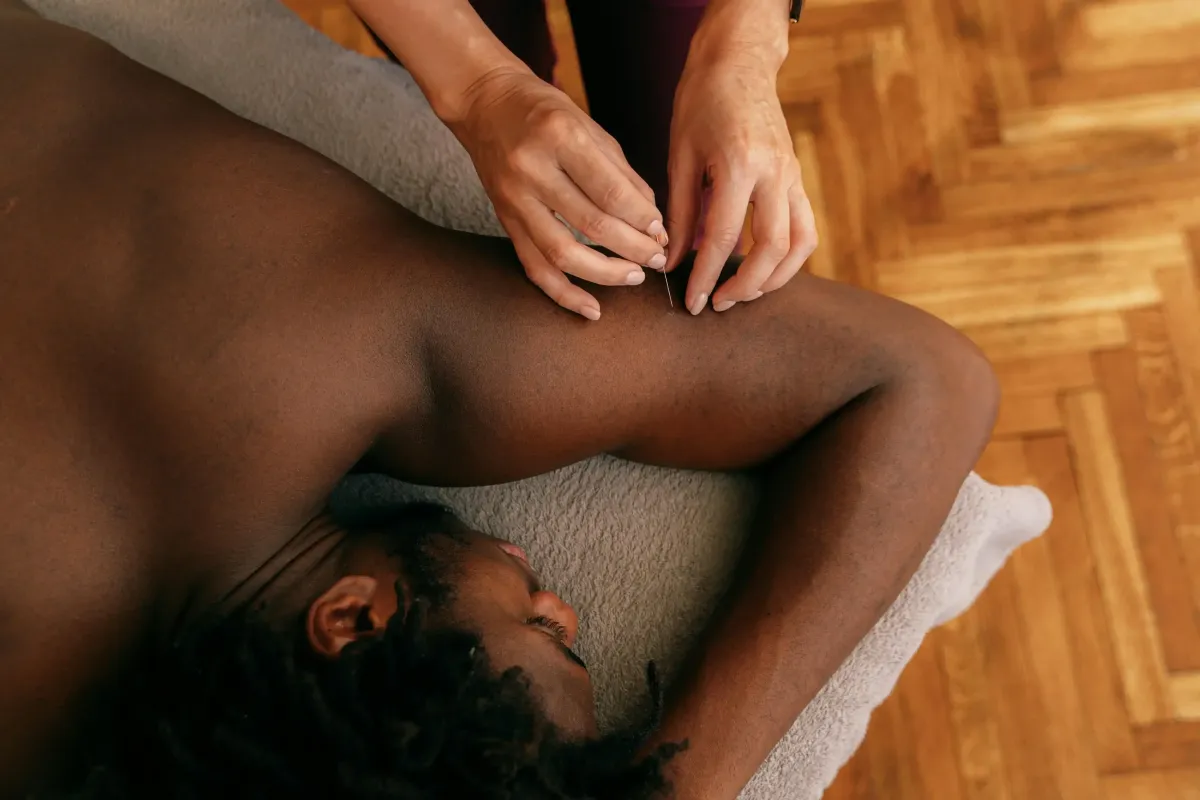
Dry needling is a modern treatment technique used by licensed physical therapists to reduce muscular tension, improve movement, and relieve pain. During treatment, a thin sterile needle is inserted into tight muscles or trigger points surrounding the affected shoulder.
Unlike acupuncture, dry needling is based on modern anatomy, biomechanics, and neuromuscular science. The goal is not energy flow or traditional medicine concepts. Instead, the treatment focuses on restoring normal muscle function and reducing pain caused by irritated or overactive tissues.
The term “dry” simply means that no medication or substance is injected through the needle. For frozen shoulder, dry needling is commonly used to address tight and protective muscles such as:
Subscapularis
Infraspinatus
Upper trapezius
Pectoral muscles
Rotator cuff muscles
When these muscles remain tense for long periods, they can increase joint compression, restrict mobility, and make rehabilitation more difficult.
Dry needling works by helping those muscles relax and improving communication between the nervous system and the shoulder muscles. Research on shoulder conditions also supports the use of dry needling alongside physical therapy. Studies examining shoulder pain syndromes have shown improvements in pain levels, range of motion, disability scores, and overall shoulder function when dry needling is combined with rehabilitation exercises and manual therapy.
How Dry Needling Helps Frozen Shoulder
Frozen shoulder is not only a joint restriction problem. It also involves muscular guarding, altered movement patterns, and nervous system sensitivity. That is why treatment focused only on stretching often produces slow or incomplete results.
Dry needling can help by addressing the muscular component of the condition while supporting other parts of the rehabilitation process.
Reduces Muscle Guarding and Tightness
When the shoulder becomes painful, nearby muscles naturally tighten to protect the joint. Unfortunately, this protective response often creates more stiffness and discomfort. Dry needling helps release these tight muscle bands and trigger points, allowing the shoulder to move with less resistance.
Improves Shoulder Mobility
As muscle tension decreases, patients are often able to tolerate stretching and mobility exercises more comfortably. This can help improve movements such as:
Reaching overhead
Reaching behind the back
Lifting objects
Rotating the arm outward
Decreases Pain Sensitivity
Dry needling may help calm irritated pain pathways in the nervous system. The treatment can stimulate the body’s natural pain-relieving responses and reduce sensitivity around the shoulder. Some patients notice reduced pain during daily activities or improved sleep after treatment sessions.
Enhances Blood Flow and Tissue Recovery
Restricted muscles often have poor circulation and increased irritation. Dry needling can improve local blood flow, helping deliver oxygen and nutrients to the affected tissues while reducing inflammatory buildup. Better circulation may help support the healing process and reduce stiffness over time.
Supports Better Movement Patterns
Frozen shoulder frequently changes how the body moves. Many people begin compensating by overusing the neck, upper back, or opposite shoulder.
Dry needling can help normalize muscle activation patterns so strengthening and movement retraining become more effective. When combined with manual therapy, mobility exercises, strengthening, and posture correction, dry needling becomes part of a more complete treatment strategy rather than a stand-alone solution.
What to Expect During a Dry Needling Session
Many patients feel nervous before their first session, especially if they have never experienced dry needling before. In reality, the treatment is usually quick, well tolerated, and far less uncomfortable than most people expect. During the session:
Thin sterile needles are inserted into specific tight muscles around the shoulder
You may feel a brief twitch response, pressure sensation, or deep ache
The needles are typically left in place for a short period depending on the treatment approach
Sessions are commonly combined with stretching, manual therapy, or corrective exercises afterward
After the session, mild soreness similar to post-workout discomfort is normal and usually fades within 24 to 48 hours. Many patients report that the shoulder feels looser, less tense, or easier to move shortly afterward. Because frozen shoulder affects every patient differently, treatment plans are individualized based on:
Pain severity
Stage of frozen shoulder
Range of motion limitations
Daily activity restrictions
Previous injuries or surgeries
Overall health conditions
Who Is a Good Candidate for Dry Needling?
Dry needling can be helpful for many people dealing with frozen shoulder, especially when muscle tightness and movement restriction are limiting progress. You may be a good candidate if you:
Have difficulty reaching overhead or behind your back
Wake up at night because of shoulder pain
Feel sharp pain when lifting or rotating the arm
Notice significant stiffness despite stretching regularly
Have plateaued with traditional therapy alone
Recently developed shoulder tightness after surgery or immobilization
Want a non-surgical treatment option before considering more invasive procedures
Many patients in NYC seek dry needling after months of frustration with slow recovery. In some cases, people are told to simply “wait it out,” but prolonged stiffness can continue affecting work, sleep, exercise, and daily life. Dry needling may also be useful for people recovering from:
Rotator cuff injuries
Shoulder impingement
Tendinitis
Post-surgical stiffness
Chronic shoulder pain with muscle guarding
Can Dry Needling Help You Recover Faster?
Frozen shoulder is known for being stubborn. Even with treatment, recovery can take months. One of the biggest challenges is that painful muscles continue resisting movement even when the joint itself begins improving. This is where dry needling may help speed progress. By reducing muscle tension and improving mobility, patients are often able to:
Tolerate stretching more comfortably
Progress strengthening exercises sooner
Move with less pain during daily activities
Improve shoulder motion more efficiently
Return to work, sleep, and exercise with fewer limitations
Patients often notice early improvements in:
External rotation
Overhead reaching
Shoulder relaxation
Sleep comfort
Pain during movement
Dry needling is not a stand-alone fix for adhesive capsulitis. It works best when combined with a complete rehabilitation program focused on restoring movement, strength, and joint mechanics.
How Physical Therapy Complements Dry Needling
The best outcomes for frozen shoulder usually come from combining several treatment methods rather than relying on one technique alone.
At Manhattan Physical Therapy, dry needling is integrated into a broader treatment plan designed around the patient’s stage of recovery and movement limitations. Treatment may include:
Manual Therapy
Hands-on joint mobilization techniques help improve capsular mobility and reduce stiffness inside the shoulder joint.
Mobility and Stretching Exercises
Specific stretches target movements commonly restricted with frozen shoulder, including:
External rotation
Abduction
Flexion
Behind-the-back reaching
Strengthening Exercises
As mobility improves, strengthening becomes important to restore shoulder stability and control. Treatment often focuses on:
Rotator cuff muscles
Scapular stabilizers
Postural muscles
Postural Correction
Poor posture can place additional stress on the shoulder and surrounding muscles. Improving spinal and shoulder alignment often helps reduce strain during movement.
Home Exercise Programs
Recovery from frozen shoulder does not happen only during clinic visits. Consistency at home matters.
What Does Recovery From Frozen Shoulder Look Like?
Recovery timelines vary from person to person. Some cases improve within several months, while others take longer depending on the severity of stiffness and how long symptoms have been present. In general:
Early-stage treatment tends to produce better results
Consistent therapy improves long-term outcomes
Gentle movement is usually more effective than aggressive stretching
Ignoring symptoms may prolong stiffness and weakness
Many people experience gradual progress rather than overnight changes. Small improvements in daily function often appear first, such as:
Reaching a shelf more comfortably
Sleeping with less pain
Putting on clothes more easily
Lifting the arm farther overhead
If shoulder stiffness and pain are limiting your daily activities, dry needling combined with physical therapy may help you regain movement and reduce discomfort.
Don’t let frozen shoulder limit your daily life. At Manhattan Physical Therapy, our team provides personalized treatment plans, including dry needling and hands-on physical therapy, to help you move with less pain and better mobility. Call (212)-213-3480 today to schedule your evaluation.
Frequently Asked Questions
Does dry needling hurt?
Most patients describe the sensation as a deep ache, twitch, or pressure rather than sharp pain. Some soreness afterward is common but usually temporary.
How many sessions are usually needed?
This depends on the severity of the condition and how restricted the shoulder is. Some people notice improvement within a few sessions, while others benefit from longer treatment plans combined with physical therapy.
Is dry needling the same as acupuncture?
No. Although both use thin needles, the treatment philosophy and goals are different. Dry needling is based on modern anatomy and muscle dysfunction, while acupuncture is rooted in traditional Chinese medicine.
Can dry needling help if I already had a cortisone injection?
Yes. Many patients use dry needling and physical therapy after injections to improve mobility and reduce lingering muscle tightness.
Is frozen shoulder permanent?
In most cases, no. Frozen shoulder usually improves over time, but proper treatment may help reduce pain, restore motion faster, and prevent long-term limitations.
What Do They Say About Us?
Alexander Liu
"Everyone on the team at Manhattan Physical Therapy is super nice and caring. They were able to pretty quickly diagnose my knee and hip problems and immediately put me to work to reduce the pain.."
Henry Myerberg
"You're not just a patient when you come to the Manhattan Physical Therapy. You feel like family there. In particular, Erica with her colleagues John, Lidia and Joe not only fix and improve you physically, they make you feel welcomed and cared for.."
Hakyung Kim
"Everyone is so kind and helpful! my knee and hip pain have improved massively since starting Manhattan PT, highly recommend to anyone. special thanks to Bianca, Lidia, Joe, and John!"
Manhattan Physical Therapy
✆ Phone (appointments):
(212) 213-3480
Address: 385 5th Ave, Suite 503, New York, NY 10016


