

Acupuncture for Plantar Fasciitis in NYC
Manhattan Physical Therapy
What Is Plantar Fasciitis and Why Does It Cause Heel Pain?
Plantar fasciitis is one of the most common causes of heel pain. It happens when the plantar fascia, a thick band of connective tissue that runs along the bottom of the foot, becomes irritated or overloaded.
This tissue connects the heel bone to the toes and helps support the arch of the foot while you walk, run, or stand. Because it absorbs a large amount of stress every day, repeated strain can cause tiny tears within the fascia. Over time, this leads to inflammation, stiffness, and persistent heel pain.
Many people describe plantar fasciitis pain as a sharp, stabbing sensation in the heel, especially during the first few steps in the morning. The discomfort often improves after walking for a few minutes but may return after long periods of standing or after exercise.
Plantar fasciitis affects about 1 in 10 people during their lifetime, making it one of the most frequent foot problems treated in physical therapy clinics. Several factors can increase the risk of developing plantar fasciitis, including:
Running or high-impact activities
Standing for long hours at work
Tight calf muscles
Flat feet or high arches
Wearing unsupportive footwear
Excess body weight
Sudden increases in exercise intensity
Over time, continued stress on the plantar fascia can also contribute to the formation of a heel spur, a small bony growth on the heel bone. While heel spurs are often seen on imaging tests, the pain usually comes from the inflamed fascia rather than the spur itself.
What Symptoms Suggest You May Have Plantar Fasciitis?
The symptoms of plantar fasciitis usually develop gradually. At first, the discomfort may feel mild, but it can become more intense if the tissue continues to be stressed. Common symptoms include:
Sharp heel pain
Many patients feel a stabbing pain at the bottom of the heel. It is often worst when taking the first steps after getting out of bed.
Pain after rest
The heel may feel stiff or painful after sitting for a long time or after getting up from a chair.
Discomfort after activity
Unlike some injuries that hurt during exercise, plantar fasciitis pain often increases after activity rather than during it.
Foot stiffness
Tightness in the arch of the foot can make it harder to flex the foot upward.
Tenderness along the heel or arch
Pressing on the bottom of the heel may cause noticeable soreness.
Changes in walking pattern
To avoid pain, some people start limping or shifting weight to the other foot.
In some cases, tight muscles in the calf and foot can create trigger points that send pain signals to the heel. These muscle knots may mimic or worsen plantar fasciitis symptoms. When heel pain lasts for weeks and does not improve with rest, stretching, or footwear changes, professional treatment can help identify the root cause and create a targeted recovery plan.
Can Acupuncture Help Relieve Plantar Fasciitis Pain?
Acupuncture has become an increasingly popular option for managing chronic musculoskeletal pain, including plantar fasciitis.
This treatment comes from traditional Chinese medicine and involves placing very thin needles into specific points of the body. These points are believed to influence the nervous system, circulation, and the body’s natural pain-control pathways.
Research suggests that acupuncture may help reduce plantar heel pain in the short term, particularly when treatments are provided over several weeks. Clinical studies comparing acupuncture with standard treatments have reported meaningful improvements in pain scores measured by tools such as:
The Visual Analog Scale (VAS) for pain
The Plantar Fasciitis Pain and Disability Scale
In several trials, patients experienced noticeable pain relief after four to eight weeks of treatment. While long-term evidence is still developing, these findings suggest acupuncture may be a useful complementary therapy.
A case study involving a patient with severe heel pain showed that a short acupuncture session targeting a specific hand acupoint reduced pain from 6 out of 10 to 2 out of 10, with improvement in walking stability. Another advantage is safety. Compared with medications or injections, acupuncture generally produces very few side effects when performed by trained professionals. For people who have persistent heel pain or want to avoid more invasive treatments, acupuncture can be part of a broader recovery strategy.
How Acupuncture Works for Plantar Fasciitis
Acupuncture helps reduce plantar fasciitis pain through several biological mechanisms in the body.
1. Pain-relieving chemical release
When acupuncture needles stimulate nerve endings, the body releases natural pain-reducing substances. These include endorphins and other neurotransmitters that help decrease the perception of pain.
2. Increased blood flow
Research shows that acupuncture triggers the release of adenosine, a compound that promotes blood circulation and has strong anti-inflammatory effects. Better blood flow helps deliver oxygen and nutrients needed for tissue repair.
3. Reduced inflammation
The stimulation created by acupuncture can calm inflammatory signals within the affected tissue. This may help reduce swelling and irritation in the plantar fascia.
4. Tissue healing support
Acupuncture also activates fibroblasts, the cells responsible for producing collagen in connective tissue. This process can help repair micro-damage in the plantar fascia.
5. Muscle relaxation and trigger point release
Many plantar fasciitis cases involve tight calf muscles, including the gastrocnemius and soleus. These muscles can develop trigger points that send pain signals toward the heel.
Acupuncture can release these tight areas, improving flexibility in the foot and ankle while reducing stress on the plantar fascia.
How Many Acupuncture Sessions Are Usually Needed?
The number of acupuncture sessions for plantar fasciitis depends on how long the pain has been present and how severe the symptoms are.
In many cases, practitioners recommend one to two sessions per week for four to six weeks as an initial treatment plan. Research on acupuncture for plantar heel pain has shown that noticeable improvement often appears within four to eight weeks of consistent treatment.
Some patients feel relief after only a few sessions, especially if the condition is relatively new. Others with long-standing heel pain may need a longer treatment period to allow the tissue to recover and the nervous system to calm down.
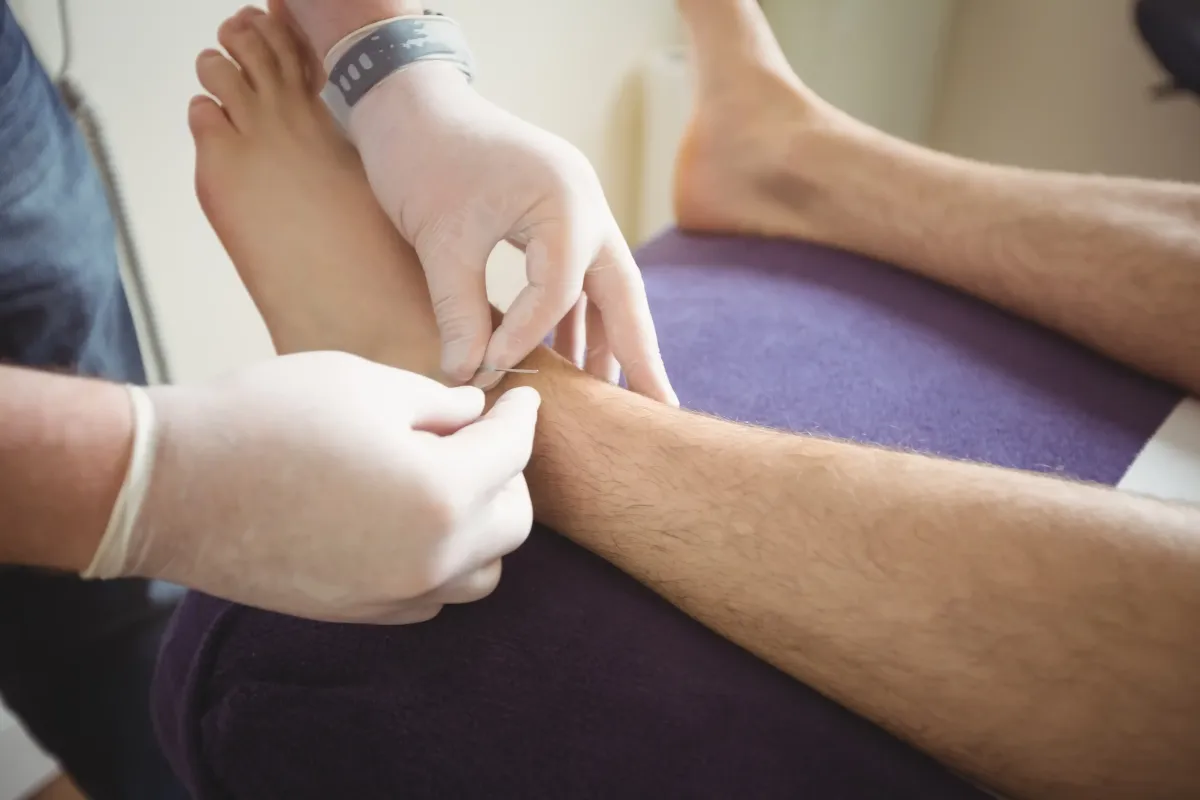
During each session, very thin needles are placed into carefully selected points around the foot, ankle, and lower leg. Some practitioners also treat points in the hands or other areas of the body that influence pain pathways.
Sessions usually last between 10 and 30 minutes, and most patients describe the sensation as mild pressure or warmth rather than pain.
Which Muscles and Trigger Points Are Treated?
Plantar fasciitis is not always caused only by inflammation in the fascia itself. In many cases, tight muscles in the lower leg and foot create trigger points that send pain signals toward the heel.
These muscles play an important role in controlling foot movement and absorbing impact during walking and running.
Common trigger point areas treated with acupuncture include:
Gastrocnemius (upper calf muscle)
Soleus (deep calf muscle)
Quadratus plantae (muscle on the bottom of the foot)
By placing acupuncture needles in these areas, practitioners aim to:
Relax tight muscles
Release trigger points
Improve blood circulation
Reduce pain signals traveling to the brain
When muscle tension is reduced, the stress placed on the plantar fascia also decreases, which can support long-term healing.
Why Combining Acupuncture with Physical Therapy Often Works Best
While acupuncture can reduce pain and muscle tension, it does not address every factor that contributes to plantar fasciitis. That is why many treatment plans combine acupuncture with physical therapy and targeted rehabilitation.
Physical therapy focuses on correcting the underlying mechanical problems that often lead to plantar fascia irritation.
This may include:
Stretching tight muscles
Stretching the calves and plantar fascia helps reduce tension placed on the heel during movement.
Strengthening foot and ankle muscles
Stronger stabilizing muscles improve arch support and reduce strain on the fascia.
Improving walking mechanics
Therapists often evaluate gait patterns to identify movement habits that may be contributing to the condition.
Manual therapy techniques
Hands-on treatments can improve mobility in the foot and ankle joints.
Activity modification guidance
Patients receive advice about training intensity, footwear, and daily activities that may affect recovery.
Acupuncture can make these exercises easier to tolerate by decreasing pain and improving muscle flexibility. When pain is reduced, patients are often able to participate more fully in rehabilitation exercises, which helps address the root cause of the condition.
What Other Treatments May Be Used for Plantar Fasciitis?
Most cases of plantar fasciitis improve with conservative treatment. Doctors and therapists usually begin with simple strategies before considering more advanced options. Common early treatments include:
Rest and reduced activity
Ice therapy for pain relief
Stretching programs for the calf and plantar fascia
Supportive footwear or orthotics
Night splints that stretch the fascia during sleep
Some patients also use over-the-counter medications such as acetaminophen or non-steroidal anti-inflammatory drugs (NSAIDs). However, long-term use of these medications may carry risks such as stomach irritation, cardiovascular complications, or kidney problems. When symptoms persist despite initial care, additional treatments may be considered. These can include:
Physical therapy
Corticosteroid injections
Platelet-rich plasma (PRP) therapy
Extracorporeal shockwave therapy
Custom orthotics
Surgery is typically considered only when other treatments fail after several months. Procedures such as plantar fasciotomy can relieve pain in many cases but involve recovery time and potential complications.
Because of these factors, many patients explore non-invasive options like acupuncture before moving toward more aggressive treatments.
When Should You Seek Professional Care for Heel Pain?
Occasional foot soreness after a long day is common. However, persistent heel pain should not be ignored.
You may benefit from professional evaluation if:
Heel pain lasts more than a few weeks
Pain interferes with walking or exercise
The pain becomes worse over time
Morning heel pain is severe
Home treatments do not provide relief
At Manhattan Physical Therapy, patients receive individualized care designed to reduce pain, restore foot function, and help prevent future flare-ups. Treatment plans may include physical therapy, mobility work, and complementary options such as acupuncture when appropriate.
If plantar fasciitis pain is interfering with your ability to walk, exercise, or work comfortably, professional care can help you get back on your feet. Call (212)-213-3480 to schedule an appointment and learn about treatment options for plantar fasciitis in NYC.
What Do They Say About Us?
Alexander Liu
"Everyone on the team at Manhattan Physical Therapy is super nice and caring. They were able to pretty quickly diagnose my knee and hip problems and immediately put me to work to reduce the pain.."
Henry Myerberg
"You're not just a patient when you come to the Manhattan Physical Therapy. You feel like family there. In particular, Erica with her colleagues John, Lidia and Joe not only fix and improve you physically, they make you feel welcomed and cared for.."
Hakyung Kim
"Everyone is so kind and helpful! my knee and hip pain have improved massively since starting Manhattan PT, highly recommend to anyone. special thanks to Bianca, Lidia, Joe, and John!"
Manhattan Physical Therapy
✆ Phone (appointments):
(212) 213-3480
Address: 385 5th Ave, Suite 503, New York, NY 10016


