

Acupuncture for Golfer’s Elbow in NYC
Manhattan Physical Therapy
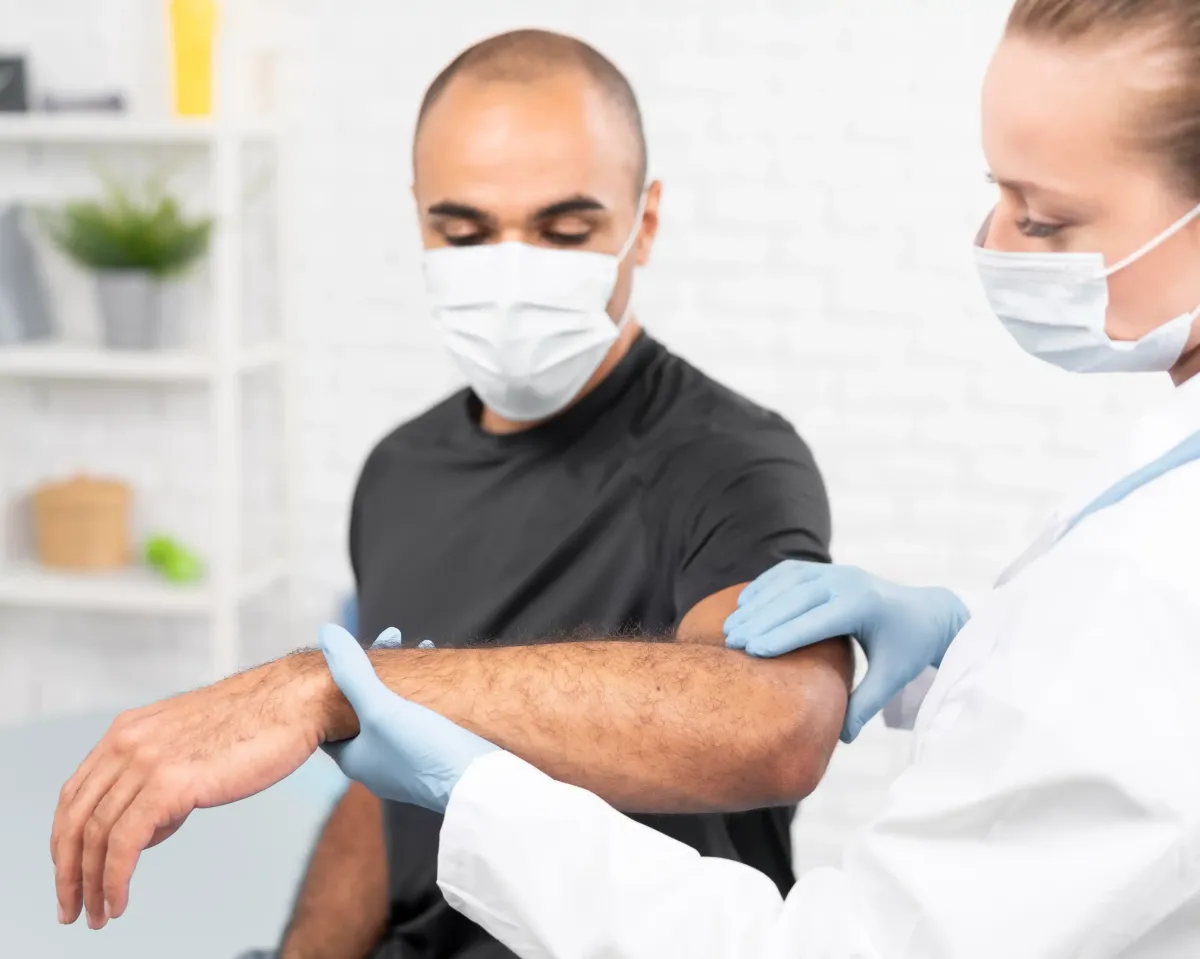
What Is Golfer’s Elbow and Why Does It Hurt?
Golfer’s elbow, medically known as medial epicondylitis, is a condition that causes pain on the inside of the elbow where the forearm muscles attach to the bone. Despite the name, you don’t have to play golf to develop it. Many people in NYC experience this issue from repetitive hand and arm use, whether from sports, gym training, or desk-based work.
The pain usually starts gradually. At first, it may feel like mild soreness after activity. Over time, it can become sharper and more persistent, especially when gripping, lifting, or twisting objects. Simple tasks like opening a jar, carrying groceries, or even typing can start to feel uncomfortable.
This condition is often not just “inflammation.” In many cases, it behaves like a tendon overload problem. Repeated stress leads to small changes in the tendon structure, making it more sensitive and less able to handle everyday loads. That’s why rest alone rarely fixes it long term.
What Causes Golfer’s Elbow in Daily Life?
Most cases come down to repetitive strain. The muscles that flex your wrist and control grip are used constantly throughout the day. When they’re overworked without enough recovery, the tendon they attach to becomes irritated.
Common causes include:
Repetitive gripping or lifting (gym workouts, manual labor, carrying heavy items)
Frequent wrist flexion and forearm rotation (using tools, typing, cooking)
Sports like golf, tennis, baseball, or weightlifting
Poor technique or sudden increases in activity level
Skipping warm-ups or returning to activity too quickly after a break
It’s also important to note that not all inner elbow pain is golfer’s elbow. Nerve irritation or issues from the neck and shoulder can sometimes mimic similar symptoms. A proper evaluation helps rule out these possibilities.
What Are the Symptoms You Shouldn’t Ignore?
Golfer’s elbow tends to follow a predictable pattern, but the intensity can vary from person to person.
You might notice:
Pain and tenderness on the inside of the elbow
Discomfort that spreads into the forearm
Pain when gripping, lifting, or twisting objects
Weak or fatigued grip strength
Stiffness, especially in the morning or after activity
In some cases, symptoms build slowly and only show up during certain movements. In others, the pain becomes constant and starts interfering with daily life. There are also a few warning signs that suggest something more than a simple tendon issue:
Tingling or numbness in the ring and pinky fingers
Sudden weakness in the hand
Pain that feels sharp, electric, or radiates beyond the forearm
How Acupuncture Helps Relieve Golfer’s Elbow Pain
Acupuncture has become a practical option for managing golfer’s elbow, especially for people who want to avoid medication or are not getting enough relief from rest alone.
Instead of just masking symptoms, acupuncture works by changing the environment around the injured tendon and improving how your body responds to pain. Here’s what it actually does:
1. Reduces pain sensitivity
Acupuncture helps regulate how your nervous system processes pain. Many patients notice that everyday movements feel easier after just a few sessions.
2. Relieves tight forearm muscles
The muscles in your forearm often stay tight as a protective response. This constant tension keeps pulling on the irritated tendon. Targeted needling helps release that tension, reducing strain at the elbow.
3. Improves local circulation
Better blood flow brings oxygen and nutrients to the affected area. This supports tissue recovery, especially in tendons, which naturally heal more slowly than muscles.
4. Helps you tolerate rehab exercises
Pain often prevents people from doing the strengthening work needed for long-term recovery. By lowering pain and stiffness, acupuncture makes it easier to start and stick with the right exercises.
What Acupuncture Treatment Looks Like for Golfer’s Elbow
Your first visit usually lasts about 45 to 60 minutes. It starts with a detailed assessment, not just of your elbow, but how your whole arm is functioning. You’ll be asked things like:
When did the pain start?
What movements trigger it the most?
Does it feel better or worse at certain times of the day?
Are there any symptoms like tingling or weakness?
From there, the practitioner examines your grip strength, wrist movement, and areas of tenderness along the forearm and elbow. This helps identify whether the main issue is tendon overload, muscle tension, or a mix of both. During treatment, very thin needles are placed in specific areas. These may include:
The inner elbow (to target the irritated tendon)
The forearm muscles (to reduce tension and “pull” on the tendon)
Distal points in the hand or opposite arm (to help regulate pain)
Most people feel little to no pain during the session. You might notice a dull ache, warmth, or slight twitch in the muscle, which is a normal response.
Sessions typically last 15 to 30 minutes after needle placement. Follow-up visits are shorter, around 30 to 45 minutes. A common plan involves 2 sessions per week for the first couple of weeks, then spacing them out as symptoms improve.
Acupuncture vs Dry Needling: What’s the Difference?
These two approaches often get grouped together, but they serve slightly different purposes.
Acupuncture focuses on improving circulation, reducing pain, and calming the nervous system. It uses specific points based on both anatomy and traditional Chinese medicine.
Dry needling is more targeted. It focuses on releasing tight “trigger points” in the muscles. These are small areas of tension that can refer pain to the elbow. In practice, they work well together.
Acupuncture helps reduce overall pain and inflammation
Dry needling releases muscle tension that keeps stressing the tendon
When combined, patients often notice faster improvement in both pain and movement.
How Many Sessions Do You Need?
This depends on how long you’ve had the condition and how irritated the tendon is. A typical pattern looks like this:
Early stage (first 1–2 weeks): Pain starts to decrease, daily activities feel easier
Short term (3–6 sessions): Noticeable improvement in grip strength and movement
Mid-term (3–8 weeks): Fewer flare-ups, better tolerance to exercise and activity
Many patients begin to feel relief within the first few sessions. However, it’s important to understand that tendon recovery takes longer than pain relief.
Acupuncture helps create the right conditions for healing, but lasting improvement comes from gradually rebuilding strength and load tolerance.
Why Acupuncture Alone Is Not Enough for Long-Term Recovery
This is where many people go wrong.
If you only focus on pain relief and skip strengthening, the symptoms often come back once you return to normal activity.
Golfer’s elbow improves when two things happen:
The daily strain on the tendon is reduced
The tendon becomes strong enough to handle load again
Acupuncture helps with the first part. Rehabilitation handles the second. A proper recovery plan usually includes:
Gradual strengthening of the forearm muscles
Grip training to improve endurance
Mobility work for the wrist and elbow
Adjustments to daily habits (lifting, typing, sports technique)
At Manhattan Physical Therapy, treatment is built around both relief and rebuilding. The goal is to help you get back to your routine without repeating the same cycle of pain.
When Should You Seek Professional Treatment?
If your pain has lasted more than a couple of weeks or keeps coming back, it’s worth getting evaluated.
You should not ignore:
Pain that limits daily tasks
Weak grip strength
Symptoms that worsen over time
Tingling or numbness in the hand
If inner elbow pain is affecting your work, workouts, or daily routine, getting the right treatment early can make a big difference. Call (212)-213-3480 to schedule your evaluation and start a personalized plan designed to get you back to pain-free movement.
What Do They Say About Us?
Alexander Liu
"Everyone on the team at Manhattan Physical Therapy is super nice and caring. They were able to pretty quickly diagnose my knee and hip problems and immediately put me to work to reduce the pain.."
Henry Myerberg
"You're not just a patient when you come to the Manhattan Physical Therapy. You feel like family there. In particular, Erica with her colleagues John, Lidia and Joe not only fix and improve you physically, they make you feel welcomed and cared for.."
Hakyung Kim
"Everyone is so kind and helpful! my knee and hip pain have improved massively since starting Manhattan PT, highly recommend to anyone. special thanks to Bianca, Lidia, Joe, and John!"
Manhattan Physical Therapy
✆ Phone (appointments):
(212) 213-3480
Address: 385 5th Ave, Suite 503, New York, NY 10016


